Sell by, best by, use by — only one of them is about safety
Grocery List Plus Editorial Staff
Published August 8, 2026 · 4 min read
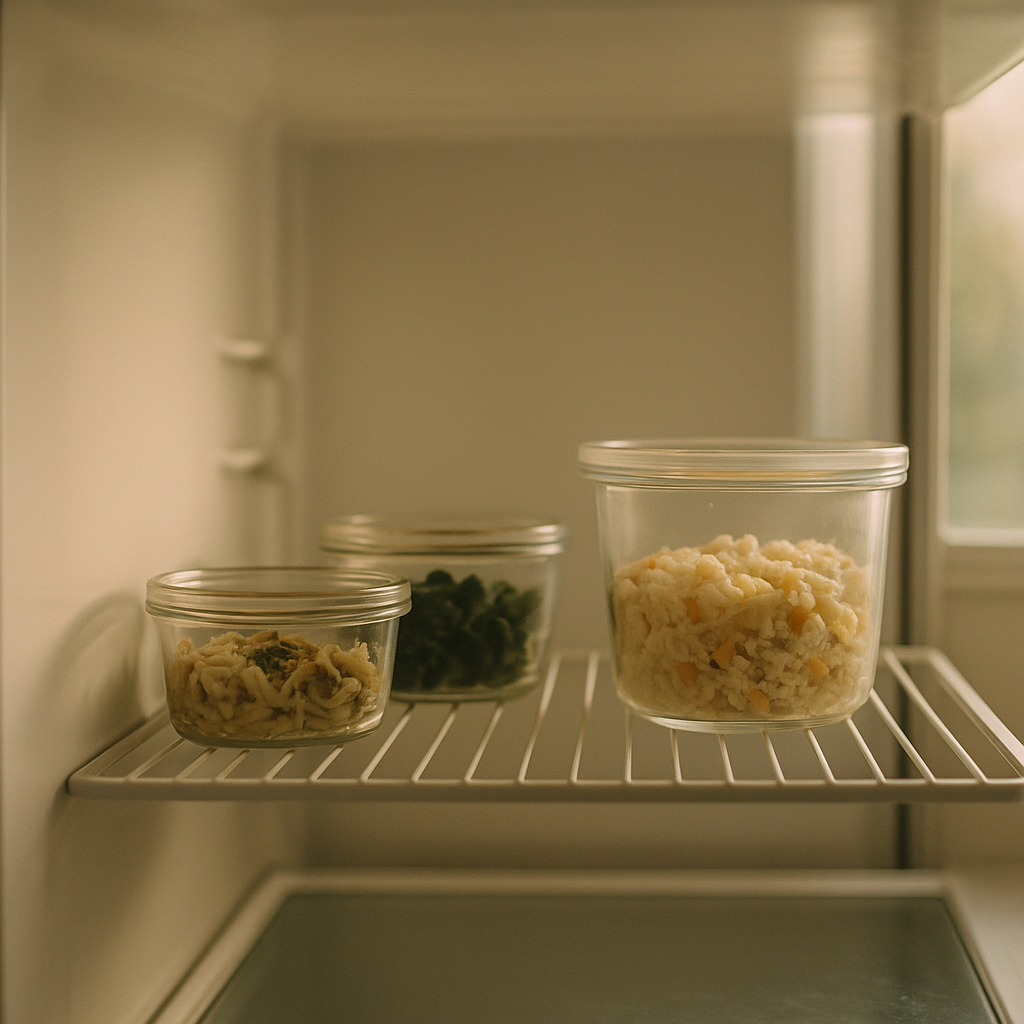
Here is the thing almost nobody is told: with a single exception, the dates printed on food in American grocery stores are not safety deadlines. They are the manufacturer's estimate of when the product stops being at its best.
That distinction is worth real money. Households throw out an enormous volume of edible food every year, and confusion about date labels is one of the documented reasons why. If you have ever poured out yogurt because yesterday was the date on the lid, you have thrown away food that was almost certainly fine.
The labels, and what each one actually means
Sell by is a message to the store, not to you. It tells staff how long to keep the item on display, leaving reasonable time for you to use it at home afterward. Milk with a sell-by date of the 12th is generally expected to be good for a while past that in a properly cold refrigerator. It was never intended as guidance for the person buying it, which is why finding it printed prominently on the front is confusing by design rather than by intent.
Best if used by is about quality — flavor, texture, color. Crackers past this date go soft. Canned tomatoes may darken. Neither is a safety event. This is the most common phrasing on shelf-stable food, and it's the one people most often mistake for an expiration date.
Use by is also usually about quality, with one critical exception noted below. On most products it means the same thing as "best if used by."
Freeze by simply tells you when to move something to the freezer to preserve quality. It is not a discard date at all.
The one exception
Infant formula is the only food product for which the date is federally regulated in the United States, and it should be treated as a hard deadline. Manufacturers must guarantee nutrient content and container integrity through that date; after it, the formula may not deliver the nutrition an infant needs, regardless of whether it appears fine. Do not buy it past date and do not use it past date.
That is the exception. Everything else on a US grocery shelf carries dates set by the manufacturer with no federal standard behind them.
Why the system is like this
There is no single federal law governing date labels on most food. Manufacturers choose their own phrasing and their own dates, and the result is exactly the inconsistency you see in your own pantry — dozens of formats, several meanings, no common standard.
The industry has been moving toward simplifying this to two phrases, "Best if Used By" for quality and "Use By" for the small number of genuinely perishable items, and both the USDA and FDA have encouraged that consolidation. Adoption is voluntary and partial, so for now you'll keep seeing all of them.
How to actually judge food
Since the date is mostly advisory, the useful skill is evaluating the food itself.
Trust your senses on most things. Off smells, visible mold, slime on the surface of meat, a fizzy quality in something that shouldn't fizz, a bulging can or lid — these are real signals. A date on a package is not.
Storage matters more than the date. A refrigerator at or below 40°F preserves food dramatically longer than one at 45°F. Milk kept in the door — the warmest spot — spoils earlier than milk on a back shelf. Two identical cartons with identical dates can have very different actual lifespans based on nothing but where they sat.
Some things deserve more caution. Ready-to-eat refrigerated items like deli meat, soft cheeses, prepared salads and smoked fish can support the growth of *Listeria monocytogenes* at refrigerator temperatures, without any change in smell or appearance. For these, dates and time limits are worth respecting more strictly, particularly if anyone in the household is pregnant, elderly, very young, or immunocompromised.
Freezing effectively stops the clock. Food frozen at 0°F stays safe indefinitely. Quality declines slowly, but safety does not.
This article explains general food-safety guidance and is not a substitute for advice from a qualified professional. When in doubt about a specific food, throw it out.
THE SHORT VERSION
With the exception of infant formula, the date on the package is the manufacturer's opinion about peak quality, not a safety cutoff and not a legal requirement. Learn the difference between "best if used by" and genuine spoilage signals, keep your refrigerator genuinely cold, treat ready-to-eat chilled foods with more care than shelf-stable ones, and freeze what you won't get to.
The food you stop throwing away is the cheapest food you'll ever buy.