How to read a food recall notice
Grocery List Plus Editorial Staff
Published August 6, 2026 · 4 min read

A recall makes the news as a brand and a product: a name, a photo, a hazard. That's enough to worry you and not nearly enough to act on. Most recalls cover a specific slice of production — certain lots, made in certain plants, within certain dates — and the package in your kitchen may or may not be in it.
The information that answers that question is always in the notice. It's just further down than most people read.
Start with the identifying details, not the headline
Every recall notice from either US food regulator includes a section describing precisely which products are affected. Look for these, in roughly this order of usefulness.
Lot code or batch code. The most specific identifier available. This is the string stamped or inkjet-printed on the package — often on the bottom of a can, the crimp of a bag, the side panel of a box, or the shoulder of a bottle. It is usually not the pretty printed text; it's the utilitarian-looking code that appears to have been added after the package was made, because it was. If a notice lists lot codes and yours isn't among them, your package is not part of the recall.
Best-by or use-by date. Recalls frequently scope by date range, since production dates map to date codes. This is the easiest field to check because it's printed legibly on the front or top.
UPC. The barcode number identifies the exact product and size. Useful because brands often recall one size and not others — the 16-ounce is affected, the 32-ounce isn't.
Establishment number. For meat and poultry, notices from USDA's Food Safety and Inspection Service identify the plant with an establishment number, printed inside the USDA mark of inspection or elsewhere on the package as "EST. 1234" or "P-1234." When a company runs several plants, this is what separates affected product from unaffected product carrying the same brand.
States or retailers of distribution. Many recalls are regional. If the notice lists distribution to twelve states and yours isn't one, that's meaningful — though it isn't conclusive, since product moves and online orders cross state lines.
Two agencies, two systems
Which regulator handles a recall depends on the food, and it changes where you look it up.
FSIS, part of USDA, covers meat, poultry, and processed egg products. Its notices are the ones with establishment numbers, and it publishes recalls with a class.
FDA covers essentially everything else — produce, seafood, dairy, packaged and shelf-stable foods, dietary supplements, infant formula.
Both publish notices publicly, and both are searchable. If you only remember one thing here: meat and poultry are USDA, everything else is FDA.
What the recall class tells you
FSIS assigns a class that describes how serious the hazard is, and it's a better guide to urgency than the tone of the news coverage.
Class I means a reasonable probability that eating the product will cause serious health consequences or death. Undeclared major allergens land here, as do pathogens like *Listeria* and certain *E. coli* strains. Treat these seriously and immediately.
Class II means a remote probability of adverse health consequences.
Class III means use of the product is not likely to cause adverse health consequences — labeling and regulatory issues, for instance.
A Class III recall on a product you own is genuinely not an emergency. A Class I recall is.
What to do if it does apply to you
Don't taste it to check. Pathogens that cause serious illness are not detectable by smell or flavor, and neither are undeclared allergens.
Don't just throw it out if you want a refund. Most retailers refund recalled product, often without a receipt. Photograph the label and lot code first, then return or discard as the notice instructs. Some notices ask you to discard rather than return, specifically to limit handling.
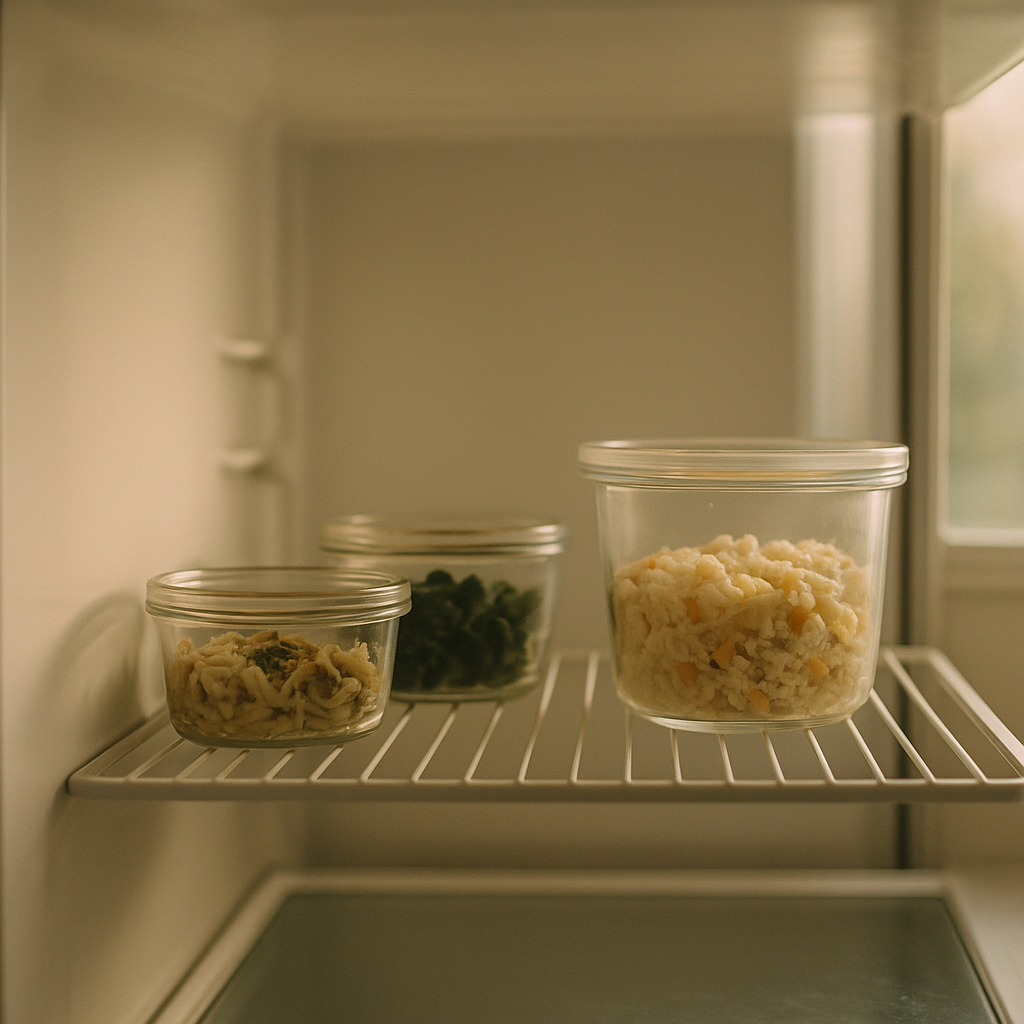
Clean what it touched. For pathogen recalls, especially *Listeria*, wipe down the refrigerator shelf or drawer where the product sat. *Listeria* survives refrigeration and can persist on surfaces.
Take allergen recalls seriously even if nobody reacted. "Undeclared milk" or "undeclared peanut" means the label was wrong. Someone who avoids that allergen was relying on that label.
The habit worth building
Recalls are announced constantly and almost none of them will ever concern you. Checking every headline is a poor use of attention, and ignoring all of them means missing the one that matters.
The practical middle ground is to check when a recall involves something you actually stock — and to check the lot code rather than the brand. That one step converts most recall news from vague worry into a two-second answer.
This article explains how to read recall notices in general terms. For any specific recall, follow the instructions in the official notice from FSIS or FDA, which is authoritative.