By Grocery List Plus Editorial Staff | Published on June 14, 2026
1440 min
Homemade Sauerkraut (Choucroute)
Recipe GLPReeb16d9f92cdb9
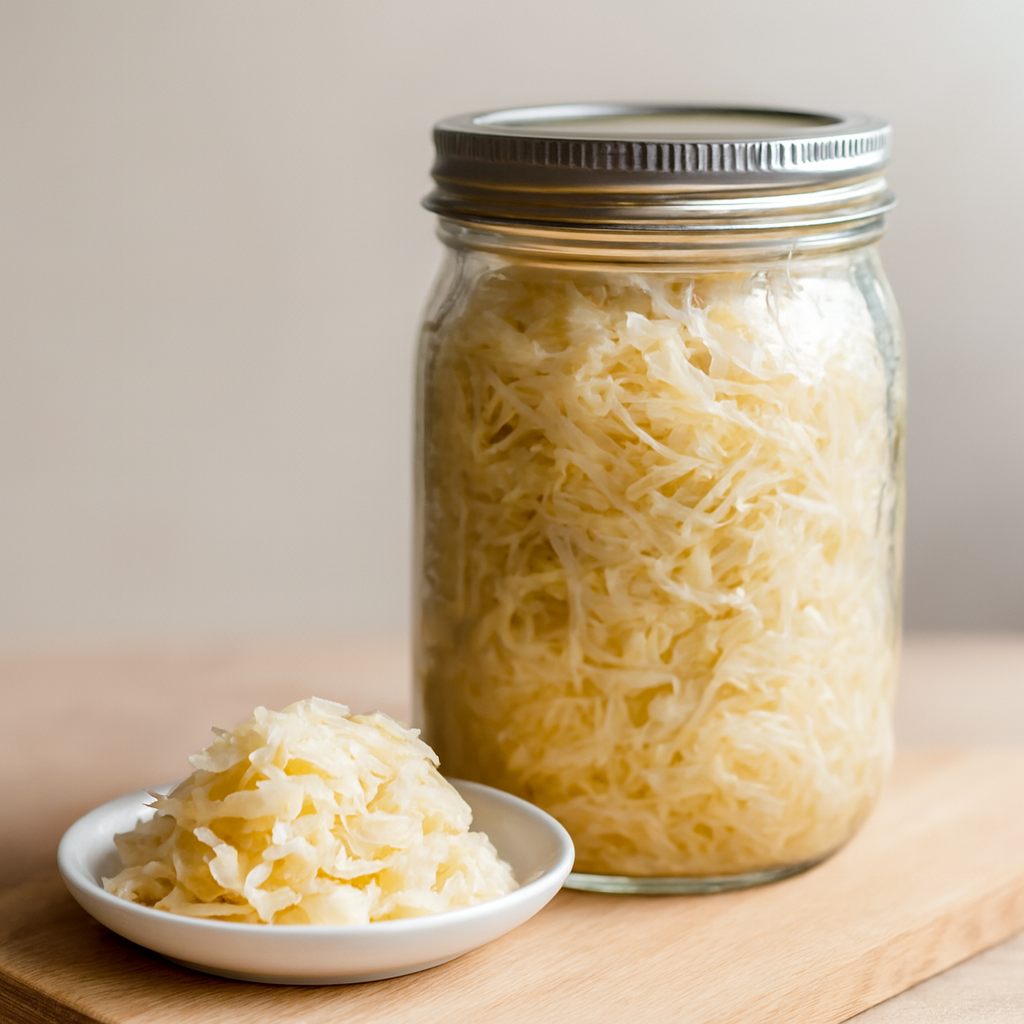
A classic Central European fermented cabbage condiment made through a simple salt-brine fermentation process. Fresh cabbage is shredded and submerged in salted water, then left to ferment in a cool, dark place for about one month. The natural fermentation develops a tangy, complex flavor and preserves the cabbage while creating beneficial probiotics. This versatile accompaniment pairs beautifully with sausages, pork dishes, and hearty stews.
Save recipes you love
Create a free Grocery List Plus account to save recipes, rate them, and add every ingredient to your grocery list in one tap.
Ingredients
1 large head green or white cabbage
1/4 cup kosher salt
16 cups water (or as needed to fill bottles)
Directions
Prepare two clean 3-liter bottles for fermentation. Using a hot pin or small drill, carefully poke 2-3 vent holes in each bottle lid to allow gases produced during fermentation to escape safely and prevent pressure buildup.
Trim away any discolored or damaged sections from the base of the cabbage head, then remove and discard the outermost leaves. Rinse the cabbage head thoroughly under cool water. Using a clean cutting board, slice the cabbage head in half lengthwise.
Using a French mandoline, carefully shred one half of the cabbage into thin, even slices and place in a clean bowl. Set aside the second half for the other batch.
Pour 2 liters (about 8 cups) of water into the first fermentation bottle. Add 2 tablespoons of kosher salt to the water (adjusting if using the full 16 cups). Secure the lid over the holes and shake vigorously for 30 seconds to fully dissolve the salt, keeping your palm pressed over the vented lid.
Fold aluminum foil into a funnel shape to help guide the shredded cabbage into the bottle opening. Grab small bunches of cabbage between your thumb and fingers, insert into the foil funnel, and use your fingers to push the strands down into the bottle lengthwise. Work in batches until all the shredded cabbage from the first half has been packed into the bottle. The cabbage should be fully submerged under the brine.
Repeat steps 3 through 5 with the remaining half of cabbage and the second fermentation bottle. Adjust brine levels if needed, maintaining the same salt-to-water ratio, so that each bottle is filled to within 1 inch of the top, leaving space for bubbling during fermentation.
Secure both lids firmly in place and shake each bottle well to evenly distribute the cabbage throughout the brine. Loosely drape plastic wrap over each lid to shield the vent holes from dust while still allowing gas to escape.
Place both bottles in a cool (below 70°F), dark location—such as a basement, pantry, or cool closet—away from direct light. Shake the bottles every 1–2 days to redistribute the cabbage and promote even fermentation. After 2 weeks, begin tasting small samples and continue fermenting until the desired tanginess is achieved, typically 3–4 weeks total. A sulfurous smell is normal in the early stages but should fade within a few days. Discard the batch immediately if you notice mushiness, sliminess, or any mold growth.
Once fermentation is complete and the sauerkraut reaches your preferred flavor, carefully cut open the bottle and remove the sauerkraut using a clean utensil. Drain the fermented cabbage and rinse lightly under cool water if desired. For long-term refrigerator storage, reserve the fermentation liquid, bring it to a boil, pour it back over the drained sauerkraut, and store in the refrigerator in airtight containers.
Comments
This is fermented cabbage at its most honest and economical: a head of green cabbage runs $2–3 at any Charlotte grocer, salt is already in every kitchen, and water is free. The stated time of 24 hours is accurate for edible results, though true depth develops over 3–4 weeks of hands-off fermentation in a jar on a shelf. It requires no special ingredients, no special equipment beyond a clean vessel, and yields a pound or more of shelf-stable condiment that reheats beautifully and costs pennies per serving. This is not a recipe; it is a staple.
Sign in or create a free account to add your review.