By Grocery List Plus Editorial Staff | Published on June 14, 2026
Serves 10
93 cal · 11540 min
Homemade Kimchi
Recipe GLPRb2bb34e7578310
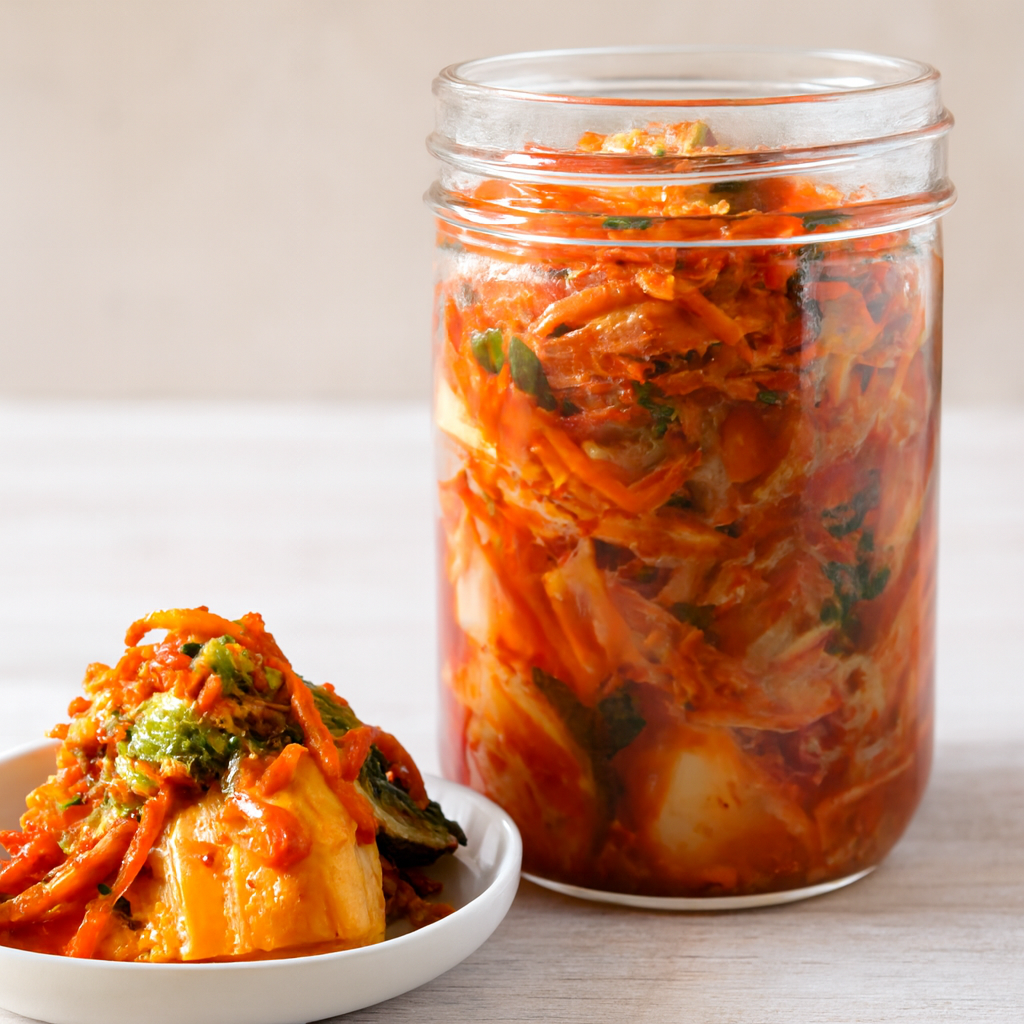
This traditional Korean fermented condiment features salted napa cabbage combined with a flavorful paste of onion, garlic, ginger, apple, and seafood aromatics, finished with gochugaru chili flakes and fresh vegetables. The mixture ferments over time to develop complex, tangy flavors. Serve as a side dish or condiment with rice and main courses.
Save recipes you love
Create a free Grocery List Plus account to save recipes, rate them, and add every ingredient to your grocery list in one tap.
Ingredients
1500 grams napa cabbage
1/4 cup sea salt
50 grams onion
30 grams garlic
15 grams fresh ginger
65 grams apple
3 tablespoons saeujeot (salted brine shrimp)
3 tablespoons cooked short-grain rice
1 tablespoon myeolchijeot (fermented anchovies)
2 teaspoons granulated sugar
150 grams Korean radish, shredded
150 grams carrot, shredded
4 scallions, thinly sliced
35 grams garlic chives, cut into 2-inch lengths
1/2 cup gochugaru (Korean chili flakes)
cold water for soaking
Directions
Remove the core from the napa cabbage and cut the head into 3-inch by 3-inch pieces. Place all the cabbage pieces into a very large bowl or clean bucket.
Sprinkle the sea salt evenly over the cabbage pieces and toss well to distribute the salt throughout. Pour cold water over the salted cabbage until fully submerged.
Cover the bowl loosely and leave at room temperature for 24 hours. This draws moisture from the cabbage, making it crunchier while beginning the fermentation process.
After 24 hours, combine the onion, garlic, ginger, apple, saeujeot, cooked rice, myeolchijeot, and sugar in a food processor or blender. Process until you reach a smooth, uniform paste.
In a medium bowl, combine the shredded Korean radish, shredded carrot, sliced scallions, and garlic chives. Add the paste from the food processor and the gochugaru.
Put on food-safe gloves and thoroughly mix the vegetable and paste mixture by hand, squishing and folding everything together until well combined. Taste and add more gochugaru if you prefer additional heat.
Drain the soaked cabbage thoroughly and return it to the large bowl. Add the seasoned vegetable mixture to the cabbage.
Using your gloved hands, toss everything together repeatedly until all components are evenly distributed and the seasoning is fully incorporated into the cabbage.
Transfer the kimchi to clean jars or a fermentation container. The kimchi is ready to eat immediately, but flavor improves significantly with fermentation. Cover loosely and let ferment in a cool place (ideally 50–145°F) for at least one week before consuming, tasting periodically to reach your desired level of tanginess.
Comments
Homemade kimchi is a rewarding project but arrives with real caveats for a Charlotte weeknight cook. Napa cabbage, garlic, ginger, and carrot are easy finds at any major local chain, but saeujeot (salted shrimp) and myeolchijeot (salted anchovy) will require a trip to an Asian market—likely H Mart or a Korean grocer—since Harris Teeter, Food Lion, Publix, Walmart, ALDI, and Kroger do not stock them, and gochugaru (Korean red pepper flakes) is inconsistently available outside specialty stores. The stated prep time of 11,540 minutes is misleading; while fermentation does take days to weeks, active hands-on work is closer to 45 minutes, which the recipe should clarify. This is a keep-and-build dish that reheats beautifully and yields ten substantial servings, making it excellent for batch cooking and meal prep, but it demands patience and advance planning rather than a quick dinner.
Sign in or create a free account to add your review.