By Grocery List Plus Editorial Staff | Published on June 4, 2026
Serves 24
60 cal · 1485 min
No Knead Bread
Recipe GLPR9a09bfe97df4b2
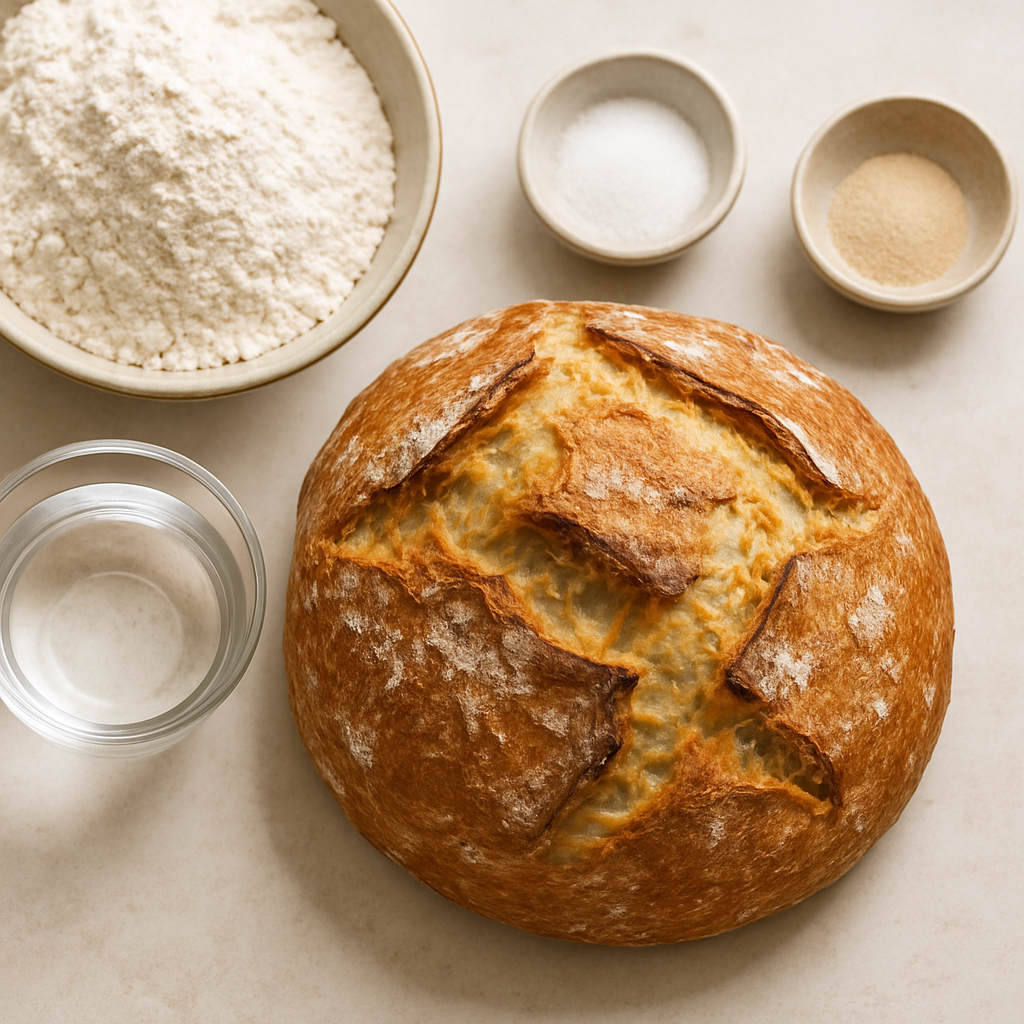
A rustic, artisan-style bread made with minimal kneading and a long cold fermentation. The dough requires just a quick mix the night before, then a final rise and bake the next day. The result is a beautiful, crusty loaf with a tender crumb inside. Minimal effort, maximum flavor.
Save recipes you love
Create a free Grocery List Plus account to save recipes, rate them, and add every ingredient to your grocery list in one tap.
Ingredients
3 cups Bread flour
¼ teaspoon Instant yeast
1 teaspoon Fine table salt
1½ cups Warm water
Directions
The night before baking, combine the bread flour, instant yeast, and salt in a large bowl. Add the warm water and stir with a wooden spoon until all the dry ingredients are hydrated and a shaggy, sticky dough forms. The dough does not need to be smooth—it will look rough and lumpy. Cover the bowl tightly with plastic wrap and let it rest at room temperature for 12 to 20 hours. During this time, the dough will rise and develop visible bubbles.
After the long fermentation, the dough will be very wet, sticky, and bubbly. Lightly flour a work surface. Wet a spatula or your hands with water (this prevents sticking). Turn the dough out onto the floured surface and gently fold the edges toward the center several times with your wet spatula, rotating the dough as you go. Shape it into a rough ball by nudging and folding. Do not knead—just fold gently to create surface tension. The dough will remain quite sticky.
Lay a large sheet of parchment paper on the counter. Carefully transfer the shaped dough onto the parchment. Lift the parchment paper with the dough and place it into a large bowl (the parchment helps during the transfer to the pot). Cover the bowl with a clean kitchen towel and let the dough rest and rise for 2 hours.
About 30 minutes before the 2-hour rise is complete, place your covered Dutch oven or covered pot (cast iron, Pyrex, ceramic, or enameled—5-quart capacity or larger) into a cold oven. Set the oven to 450°F and preheat the pot along with the oven.
After the 2-hour rise, the dough should have visibly increased in size and will jiggle when moved. Carefully remove the preheated covered pot from the oven using oven mitts. Grab both ends of the parchment paper and carefully lift the dough into the hot pot. It is fine if the dough lands unevenly—simply shake the pot gently to even it out. Cover the pot with its lid.
Bake the covered dough for 30 minutes. After 30 minutes, carefully remove the lid (steam will escape) and continue baking uncovered for 15 to 20 minutes longer, until the crust is deep golden brown and the center of the loaf reaches an internal temperature of 210°F on an instant-read thermometer.
Remove the pot from the oven using oven mitts. Carefully remove the bread using the parchment paper edges and transfer it to a wire rack to cool completely before slicing. If you prefer a crisper crust and are not serving immediately, place the cooled bread in a 350°F oven for 10 minutes to re-crisp.
Comments
This is genuinely cheap—bread flour, yeast, salt, and water cost under $2 total for a 24-serving loaf, or under a dime per serving, and all four ingredients are stocked at every Charlotte grocer. The stated time of 1485 minutes (just under 25 hours) is honest for the method, which requires minimal active work but substantial passive rise time, making it genuinely no-knead and suitable for weeknight prep if you start the evening before. It reheats perfectly and produces a rustic loaf with excellent crust, though the technique demands patience and works best if you own a Dutch oven; the recipe assumes you already have one, which not all households do.
Sign in or create a free account to add your review.