By Grocery List Plus Editorial Staff | Published on June 3, 2026
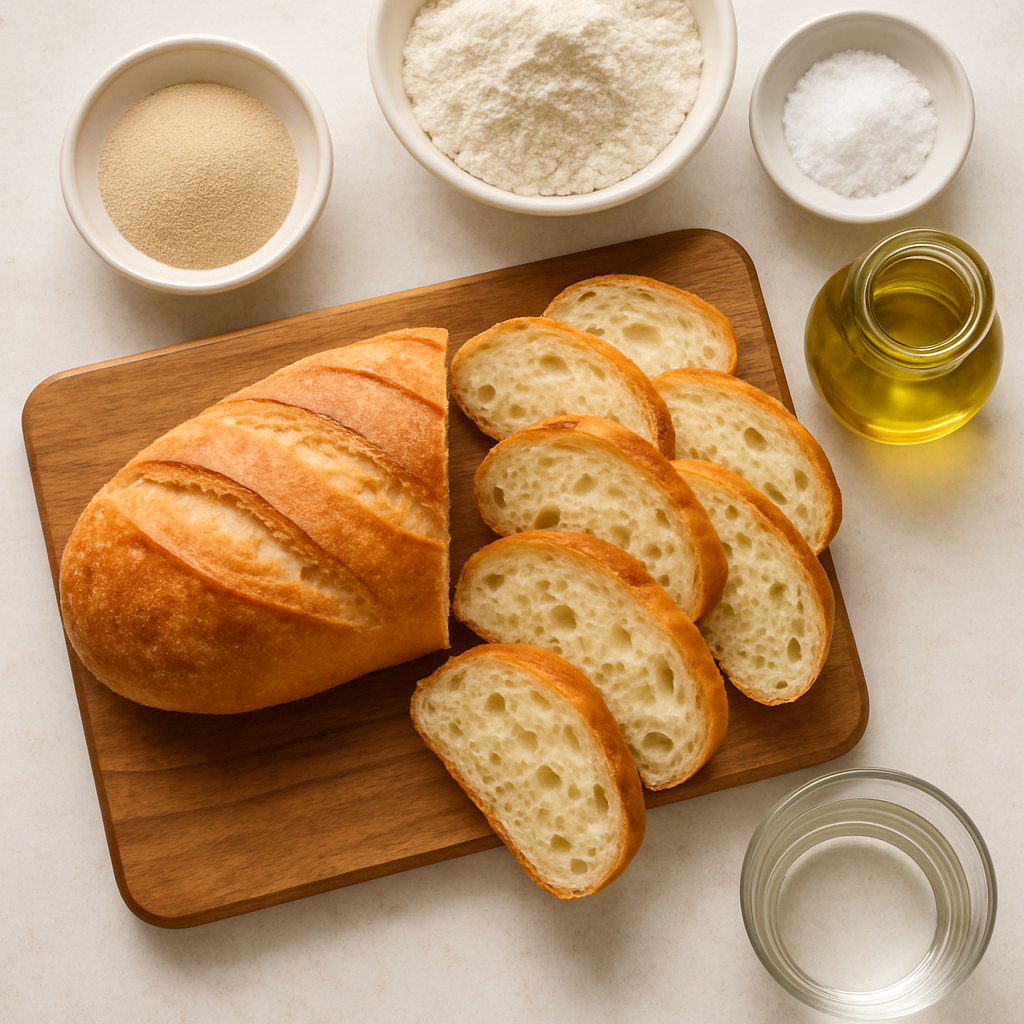
Serves 16
121 cal · 180 min
French Bread
Recipe GLPR06ada152f248a8
Crusty, artisanal French bread with a tender, airy crumb made using a simple yeast dough and steam baking. This classic loaf develops a beautiful golden crust and satisfying chew through a long fermentation and high-heat baking method with moisture.
Save recipes you love
Create a free Grocery List Plus account to save recipes, rate them, and add every ingredient to your grocery list in one tap.
Ingredients
2 teaspoons active quick-rising dry yeast
4 cups bread flour, divided (1/4 cup reserved)
2 teaspoons salt
1 1/2 cups warm water (110°F)
Oil spray or oil for coating bowl
1/2 cup water for steam (if using baking stone or sheet)
1/4 cup water for covered baker (if using cast-iron pot or covered baker)
Directions
Measure out 1/4 cup of bread flour and set aside on a clean work surface. This flour will be available for adjusting dough consistency during mixing if needed.
Pour the remaining 3 3/4 cups of bread flour into the bowl of an electric mixer. Create a small mound and place the yeast on one side of the flour. Place the salt on the opposite side of the flour. Keeping the salt and yeast separate prevents the salt from inhibiting the yeast activation.
Pour the warm water into the mixer bowl over the flour. Using the regular paddle attachment, mix on low speed until all the dry ingredients are incorporated and a shaggy dough mass forms. Switch to the dough hook attachment.
Mix on medium speed for 2 minutes using the dough hook. The dough should clear the sides of the bowl but still stick slightly to the bottom. If the dough appears too sticky, add the reserved flour 1 tablespoon at a time until the desired consistency is reached. If it seems too stiff or dry, add water 1 tablespoon at a time to achieve the correct texture.
Transfer the dough to a large bowl lightly coated with oil spray. Turn the dough over so that all surfaces are thinly coated with oil. Cover the bowl tightly with plastic wrap. Place in a warm location (around 75-80°F) and allow to rest and rise for 1 1/2 hours, until the dough nearly doubles in volume. While the dough rises, approximately 1 hour into the rising time, preheat the oven to 450°F. Place a pizza stone, inverted baking sheet, or covered cast-iron pot into the oven to heat thoroughly.
After the dough has fully risen, gently punch it down to release excess gas. Form the dough back into a smooth, round ball. Test readiness by poking your finger into the surface—it should yield to pressure and slowly spring back, indicating proper fermentation.
Carefully remove the preheated baking vessel from the oven. (For stone or baking sheet: Have 1/2 cup of water ready. Quickly place the dough loaf onto the hot surface, immediately pour the water onto the oven floor to create steam, and close the oven door. For covered cast-iron pot or baker: Place 1/4 cup of water directly into the pot before placing the dough inside, then cover with the lid, and place back in the oven.)
If using a pizza stone or inverted baking sheet: Bake for 20-25 minutes. Check the internal temperature of the bread using an instant-read thermometer—it should read between 190-210°F. If using a covered cast-iron pot or baker: Bake covered for 10 minutes, then remove the lid and bake for an additional 14 minutes. Check the internal temperature, which should reach 190-210°F. (For convection ovens, reduce times to 8 minutes covered and 10-12 minutes uncovered.)
Remove the baked loaf from the oven and transfer to a cooling rack. Allow it to cool completely before slicing, so the crumb structure sets properly. To re-crisp the crust if desired, place the loaf in a 375°F oven for 5 minutes.
Slice and serve warm, or share with friends. The recipe yields two loaves; repeat the shaping and baking process with the remaining dough if two separate loaves are desired.
Comments
French bread is dirt cheap—yeast, bread flour, salt, oil, and water cost under $3 for sixteen slices, and everything is at every Charlotte grocery chain. The stated 180 minutes is honest about total time, though the actual hands-on work is maybe twenty minutes spread across the day, making this realistic for a weeknight starter or weekend project. The loaves reheat beautifully and freeze well, so a batch feeds your family for days. The only caveat is that bread-making demands patience and a feel for dough that comes with practice; if you have never made bread, budget extra time the first attempt and don't expect a perfect crust immediately.
Sign in or create a free account to add your review.