By Grocery List Plus Editorial Staff | Published on October 3, 2026
Serves 1
673 cal · 2880 min
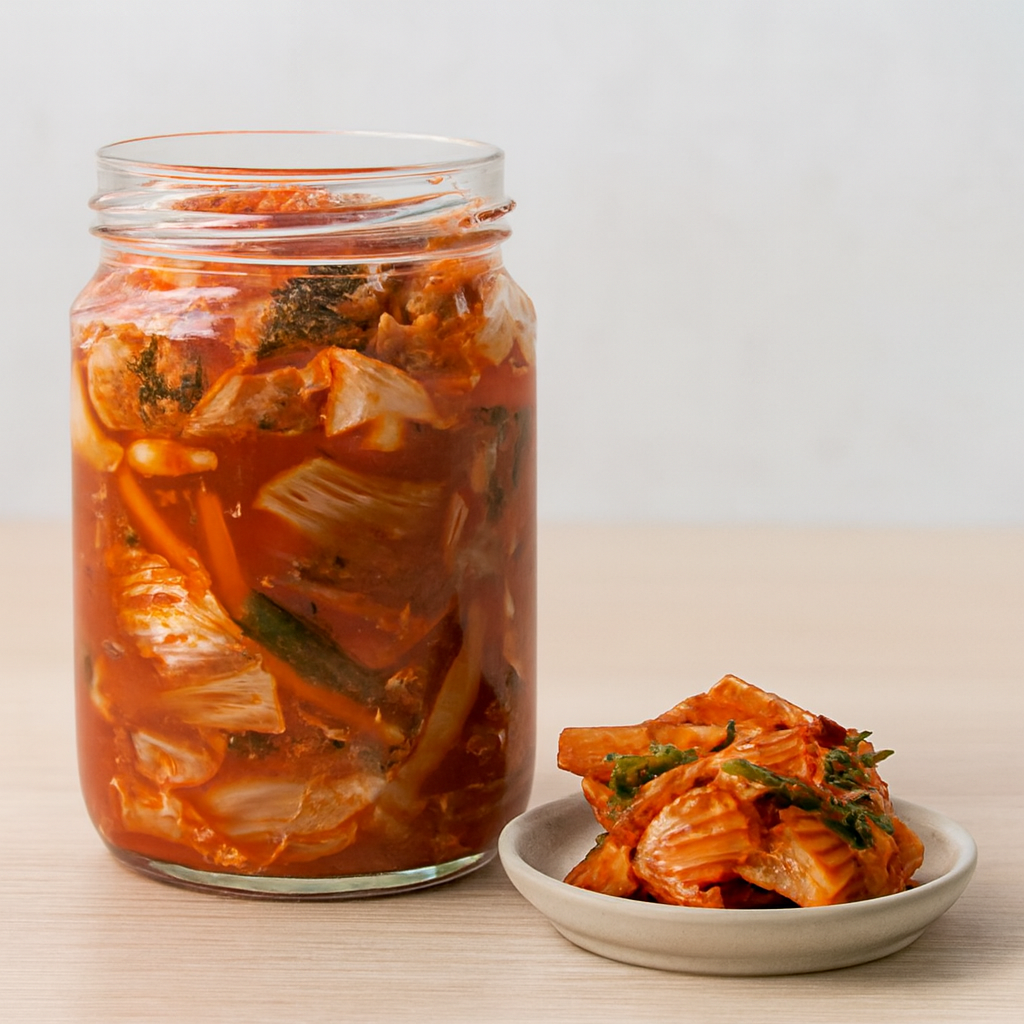
Traditional Napa Cabbage Kimchi
Recipe GLPR6c6d2a3ac146a5
Rate this recipe
Average rating: 4.0 (1)
A classic Korean fermented condiment made with napa cabbage, daikon radish, and aromatic gochugaru red pepper powder. This kimchi develops deep, complex flavors through fermentation and delivers a perfect balance of spicy, tangy, and umami notes. Serve as a side dish, condiment, or ingredient in countless Korean preparations.
Save recipes you love
Create a free Grocery List Plus account to save recipes, rate them, and add every ingredient to your grocery list in one tap.
Ingredients
2 lb Napa cabbage, roughly chopped
⅔ cup Kosher salt
¼ cup Sugar
½ cup Asian fish sauce
½ lb Daikon radish, julienned or finely shredded
¾ cup Gochugaru (Korean red pepper powder)
Directions
In a large bowl, combine the chopped napa cabbage with the kosher salt. Massage the salt into the cabbage for 5–8 minutes until it begins to release moisture and soften. Let the salted cabbage sit for 15 minutes, then rinse thoroughly under cold running water and drain well in a colander. Squeeze gently to remove excess water.
In a separate bowl, whisk together the sugar and fish sauce until the sugar dissolves completely, creating a seasoning base.
Stir the gochugaru into the fish sauce mixture to form a paste, ensuring no lumps remain.
Add the drained napa cabbage and the shredded daikon radish to the gochugaru paste. Mix thoroughly, using your hands if necessary, until every piece of vegetable is evenly coated with the red pepper mixture.
Pack the kimchi firmly into a clean glass jar, pressing down gently so the vegetables are submerged under their own liquid. Cover loosely and leave at room temperature (60–145°F) for 2–5 days, tasting daily until it reaches your desired level of fermentation. Once fermented to your preference, seal and refrigerate to slow fermentation.
Comments
Napa cabbage and daikon radish are reliable finds at any Charlotte grocery chain, but gochugaru (Korean red chili flakes) will send you to an Asian market or the international aisle at Harris Teeter or Kroger—a real detour for a weeknight cook. The stated time of 2880 minutes is honest about fermentation but misleading about active work; this is a two-day project with about 30 minutes of hands-on labor, not a weeknight dish. Cost per serving is excellent once you account for the yield: fish sauce and gochugaru are concentrate ingredients, and a head of cabbage stretches far. The final product keeps for weeks in the fridge, which is the whole point of kimchi, but this is a weekend project for the patient cook, not a spontaneous dinner.
Sign in or create a free account to add your review.