By Grocery List Plus Editorial Staff | Published on June 14, 2026
Serves 12
31 cal · 200 min
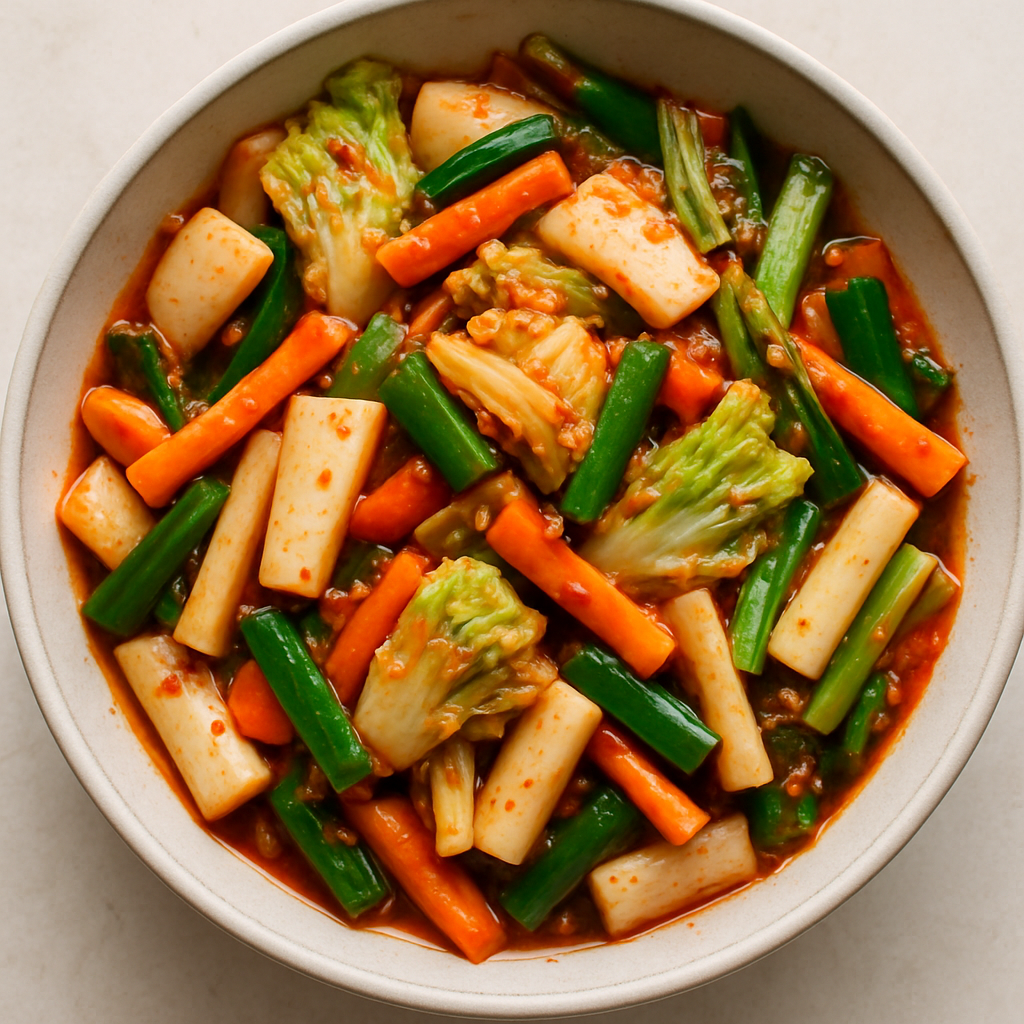
Vegetable Kimchi
Recipe GLPRfe8ab6ee9d39b4
A vibrant, fermented Korean condiment bursting with crisp vegetables, aromatic garlic and ginger, and a bold heat from gochugaru. Naturally tangy and complex, it develops deeper flavor as it ferments. Serve alongside rice bowls, grain dishes, or enjoyed straight from the jar as a zesty side.
Save recipes you love
Create a free Grocery List Plus account to save recipes, rate them, and add every ingredient to your grocery list in one tap.
Ingredients
2 pounds mixed crunchy vegetables (such as radishes, asparagus, carrots, cucumbers, beets, or turnips), cut into 3/4-inch pieces
3 tablespoons kosher salt
1 tablespoon sugar
10 scallions, cut diagonally into 1-inch pieces
1/3 cup gochugaru (coarse Korean red pepper powder) or 4 1/2 teaspoons finely ground crushed red pepper flakes
3 tablespoons finely chopped garlic
2 tablespoons fish sauce
1 tablespoon finely chopped peeled fresh ginger
Directions
In a large bowl, combine the prepared vegetables, kosher salt, and sugar. Toss well to coat evenly. Let the mixture sit at room temperature for 1 to 3 hours, stirring occasionally, until the vegetables release their liquid and become slightly softened.
Add the scallions, gochugaru, chopped garlic, fish sauce, and ginger to the vegetable mixture. Toss thoroughly until all ingredients are evenly coated and the spice paste is well distributed throughout.
Transfer the kimchi to two 1-quart glass jars, dividing the vegetables and liquid evenly between them. Leave about 1 inch of headspace at the top of each jar to allow for gases to escape during fermentation.
You can enjoy the kimchi immediately if you prefer a fresher, crunchier texture. For a more developed fermented flavor, let it sit on the countertop at room temperature for 2 days before transferring to the refrigerator. The flavor will continue to deepen and evolve over time.
Store the refrigerated kimchi in sealed jars, opening occasionally to release any accumulated gases. It will keep for up to 2 months and tastes best served as a side dish or condiment alongside rice, soups, or grain bowls.
Comments
Gochugaru (Korean red chili flakes) and fish sauce are not standard stock at Harris Teeter, Food Lion, Publix, or Walmart—budget a trip to an Asian market or the Asian aisle at a larger Kroger for both. The recipe's 200-minute timer is honest about fermentation but misleading about active hands-on work; expect 20–30 minutes of prep (chopping, brining) followed by passive sitting, which suits a weekend project but not a weeknight dinner. Ingredient costs are modest—salt, sugar, garlic, and ginger are cheap everywhere—so the final per-serving cost runs low once you're past the special-trip items. Finished kimchi keeps for weeks in the fridge and actually improves with age, making it excellent for meal prep, but it's not a serve-tonight dish and demands advance planning.
Sign in or create a free account to add your review.