By Grocery List Plus Editorial Staff | Published on June 14, 2026
45 min
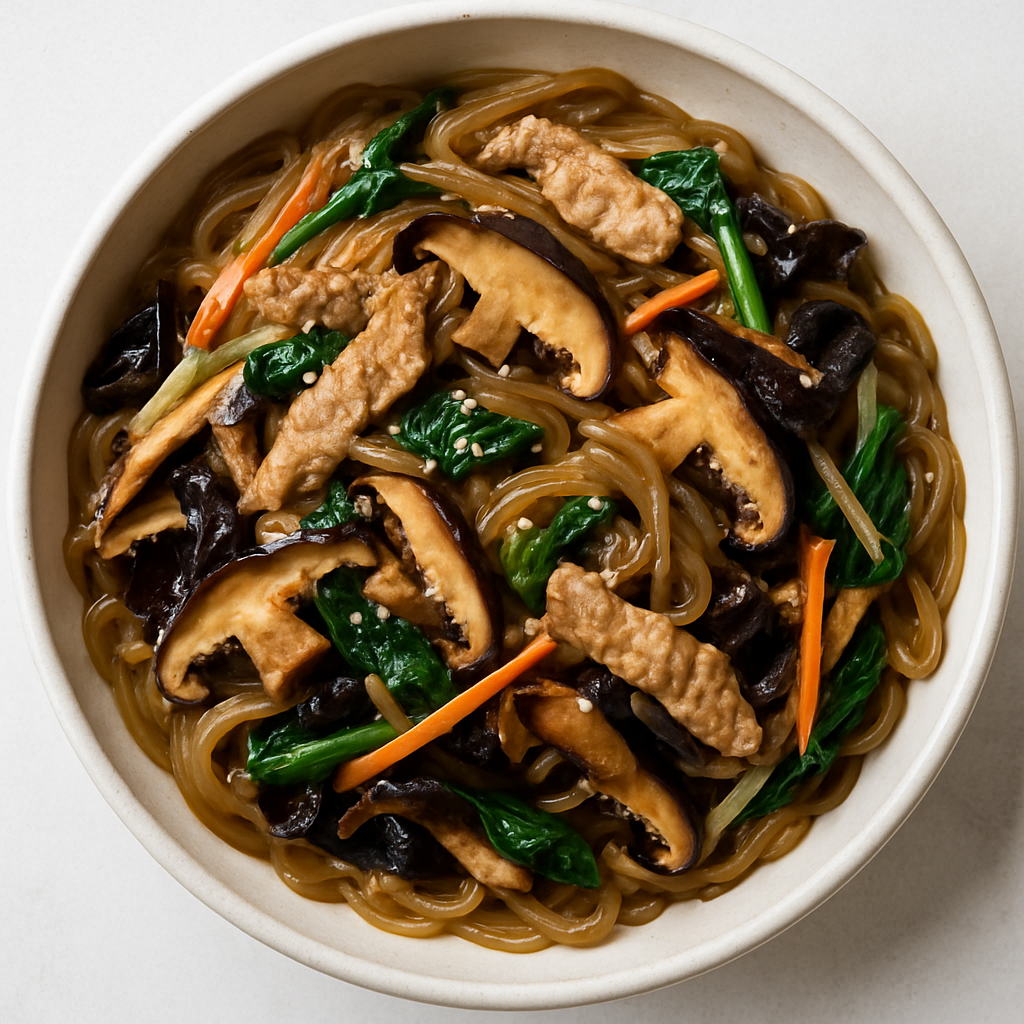
Japchae (Korean Glass Noodles with Pork and Vegetables)
Recipe GLPR694660b3b82cb9
A traditional Korean stir-fried noodle dish featuring tender glass noodles combined with seasoned pork, marinated mushrooms, sautéed vegetables, and topped with a silky egg garnish. This dish balances savory, slightly sweet, and nutty sesame flavors for a satisfying main course.
Save recipes you love
Create a free Grocery List Plus account to save recipes, rate them, and add every ingredient to your grocery list in one tap.
Ingredients
6 whole Dried wood ear mushrooms
3½ ounces Shiitake mushroom caps, sliced 1/4 inch thick
3½ ounces Lean boneless pork shoulder, cut into 2- by 1/4-inch strips
3 tablespoons Korean wheat-based soy sauce (yangjo ganjang)
3 cloves Garlic, minced
1½ tablespoons Granulated sugar
2 teaspoons Soju
¼ teaspoon Fresh ginger, minced and peeled
Freshly ground black pepper
3 tablespoons Vegetable oil
2 whole Large eggs
1 small Yellow onion, thinly sliced pole to pole
1 small Carrot, cut into julienne
Kosher salt
3 ounces Curly spinach
1 teaspoon Toasted sesame oil
1 teaspoon Ground roasted sesame seeds
5¼ ounces Korean sweet potato glass noodles (dangmyeon)
Directions
Soak the dried wood ear mushrooms in warm water for 20 minutes until softened. Drain and cut into bite-sized pieces, discarding any hard portions.
In a small bowl, combine 2 tablespoons soy sauce, 2 cloves minced garlic, 1 tablespoon sugar, 2 teaspoons soju, ginger, and a pinch of black pepper. Set this marinade aside.
Heat 1 tablespoon vegetable oil in a large skillet over medium-high heat. Add the pork strips and cook for 3-4 minutes, stirring occasionally, until lightly browned. Add the sliced shiitake mushroom caps and wood ear pieces, then pour in the prepared marinade. Cook for another 3-4 minutes, stirring occasionally, until the pork reaches an internal temperature of 160F and the mushrooms are tender. Transfer to a bowl and set aside.
In the same skillet, heat 2 teaspoons vegetable oil over medium heat. Add the sliced onion and carrot julienne, season with a pinch of salt, and sauté for 3-4 minutes until just tender-crisp. Transfer to a separate bowl.
Add 2 teaspoons vegetable oil to the skillet and stir in the spinach and 1 small clove minced garlic. Cook for 1-2 minutes until the spinach is wilted. Drain any excess moisture, then toss with 1/2 teaspoon toasted sesame oil and 1/2 teaspoon ground sesame seeds. Transfer to a bowl.
Bring a large pot of water to a boil. Add the glass noodles and cook for 4-5 minutes until translucent and tender. Drain well in a colander.
In a large bowl, combine the cooked glass noodles, pork and mushroom mixture, sautéed onion and carrot, and spinach. Drizzle with 1 tablespoon soy sauce and 1 teaspoon sugar, then sprinkle with 2 teaspoons ground sesame seeds and a light drizzle of toasted sesame oil. Toss everything together until well combined.
Lightly oil a nonstick skillet and heat over medium heat. Beat the 2 large eggs together and pour into the skillet, spreading thinly to create a thin omelet. Cook for 1-2 minutes on each side until set but still slightly tender. Transfer to a cutting board, let cool slightly, then slice into thin strips.
Divide the japchae among serving bowls or plates and top each portion with a generous amount of the sliced egg garnish. Serve warm or at room temperature.
Comments
Wood ear and shiitake mushrooms will require a stop at an Asian market—Harris Teeter and Food Lion stock neither reliably, and ALDI and Walmart only carry standard button mushrooms. Glass noodles are similarly scarce at mainstream Charlotte chains and demand a special trip to a Korean or Asian grocery. The stated 45 minutes ignores the soaking time for both the mushrooms and noodles (10-15 minutes combined) and the slicing and marinating prep, bringing realistic time closer to 70 minutes for a weeknight. Cost per serving lands around $4.50-$5.00 driven by the pork shoulder and specialty ingredients, which is reasonable but not budget-forward. The dish reheats poorly—japchae turns gummy and loses its textural appeal—making it a same-night commitment, though it does feed a family of four generously and requires just one pan once ingredients are prepped.
Sign in or create a free account to add your review.