By Grocery List Plus Editorial Staff | Published on June 4, 2026
Serves 16
750 cal · 900 min
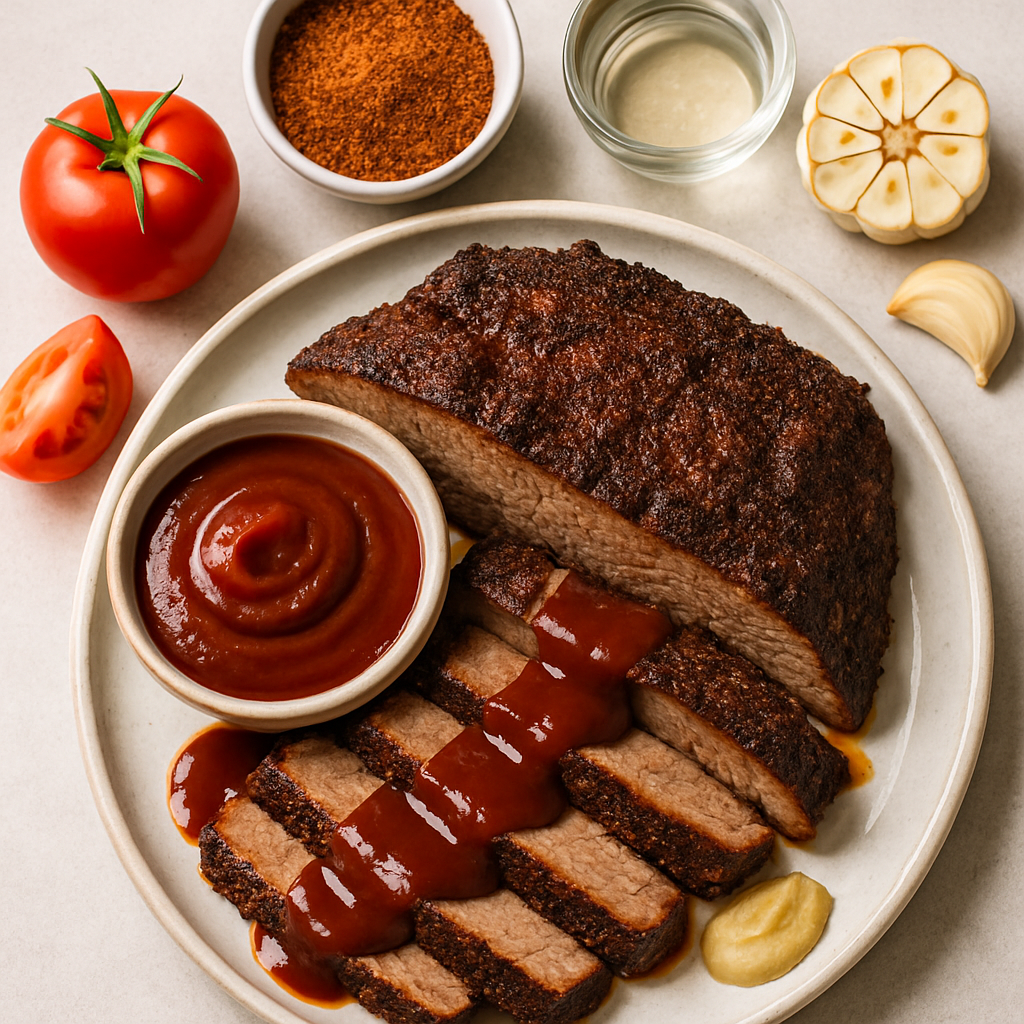
BBQ Beef Brisket
Recipe GLPRee8af0d8ff83e2
A slow-smoked whole beef brisket rubbed with coffee-infused spices, smoked for 12 hours at 225°F until reaching a tender, juicy finish with a savory bark. Served with a homemade tomato and molasses barbecue sauce that's simmered and blended until smooth. This traditional American barbecue centerpiece feeds a crowd with rich, smoky flavor and a beautiful smoke ring.
Save recipes you love
Create a free Grocery List Plus account to save recipes, rate them, and add every ingredient to your grocery list in one tap.
Ingredients
1 (12-pound) whole beef brisket
2 cups BBQ Beef Coffee Cure
2 cups ketchup
2 cups diced tomatoes
1 tablespoon tomato paste
1 1/3 cups distilled white vinegar
5 tablespoons Dijon mustard
4 teaspoons granulated garlic
4 teaspoons kosher salt
2 teaspoons crushed black peppercorns
1/2 pound brown sugar
2/3 cup molasses
1 1/3 cups water
Directions
Pat the brisket completely dry using paper towels. Divide the BBQ Beef Coffee Cure into two equal portions of 1 cup each. Rub the first cup of cure all over the brisket, pressing the spices firmly into the meat and working it into all crevices. Repeat with the second cup of cure to create an even coating. The cure will absorb moisture from the meat and develop into a flavorful crust. Place the seasoned brisket on a large plate, cover tightly with plastic wrap, and refrigerate for at least 2 hours (longer marinating is acceptable).
Prepare your smoker for hot smoking, bringing the temperature to a steady 225°F. Position the brisket on the center rack of the smoker with the fat side facing upward, placing it under dry, indirect heat. Smoke the brisket undisturbed for 12 hours. At this temperature and thickness, the standard cooking time is approximately 1 hour per pound. Do not open the smoker door during this time.
After 12 hours of smoking, use an instant-read meat thermometer to check the internal temperature at the thickest point of the brisket. When the meat reaches an internal temperature of 185°F, carefully open the smoker door and allow the brisket to rest in place for 30 minutes. During resting, the internal temperature will continue to rise to approximately 190°F, and the meat will reabsorb juices. You will see a pink smoke ring developing beneath the dark, flavorful bark.
While the brisket rests, prepare the barbecue sauce. Pour the ketchup, diced tomatoes, tomato paste, white vinegar, Dijon mustard, granulated garlic, kosher salt, crushed black pepper, brown sugar, and water into a large stockpot. Bring the mixture to a simmer over medium heat and cook, stirring occasionally, for 20 minutes until the sauce thickens slightly. Turn off the heat, then whisk in the molasses (adding it at the end prevents burning). Use an immersion blender to puree the sauce until completely smooth. Taste and adjust seasonings as needed.
Transfer the rested brisket to a cutting board. Slice the meat against the grain into your desired thickness, then chop into bite-sized pieces if preferred. The fully rested meat will have a dark, crispy crust with a distinct pink smoke ring just beneath the surface, and the interior will be tender and juicy. Serve the sliced or chopped brisket with the warm barbecue sauce on the side or drizzled over the top.
Comments
This recipe scores well on ingredient availability—every item is a standard find at Harris Teeter, Food Lion, or Walmart with no specialty stops required. At 15 hours total time, the actual hands-on prep is maybe 20 minutes (seasoning and mixing sauce), so the stated 900 minutes honestly reflects the slow-cook reality, which is fair for brisket. Cost per serving runs roughly $2–$2.50 given that a good brisket is $4–$5 per pound and 16 servings assumes a 12–14 pound untrimmed cut; for a Charlotte household, that's a reasonable mid-week investment if you're feeding a crowd or planning leftovers. The dish reheats beautifully and is classic low-maintenance cooking—set it in the oven and leave it alone—but it demands genuine advance planning and ties up an oven for most of a day, which limits weeknight appeal.
Sign in or create a free account to add your review.