By Grocery List Plus Editorial Staff | Published on June 14, 2026
Serves 6
497 cal · 3600 min
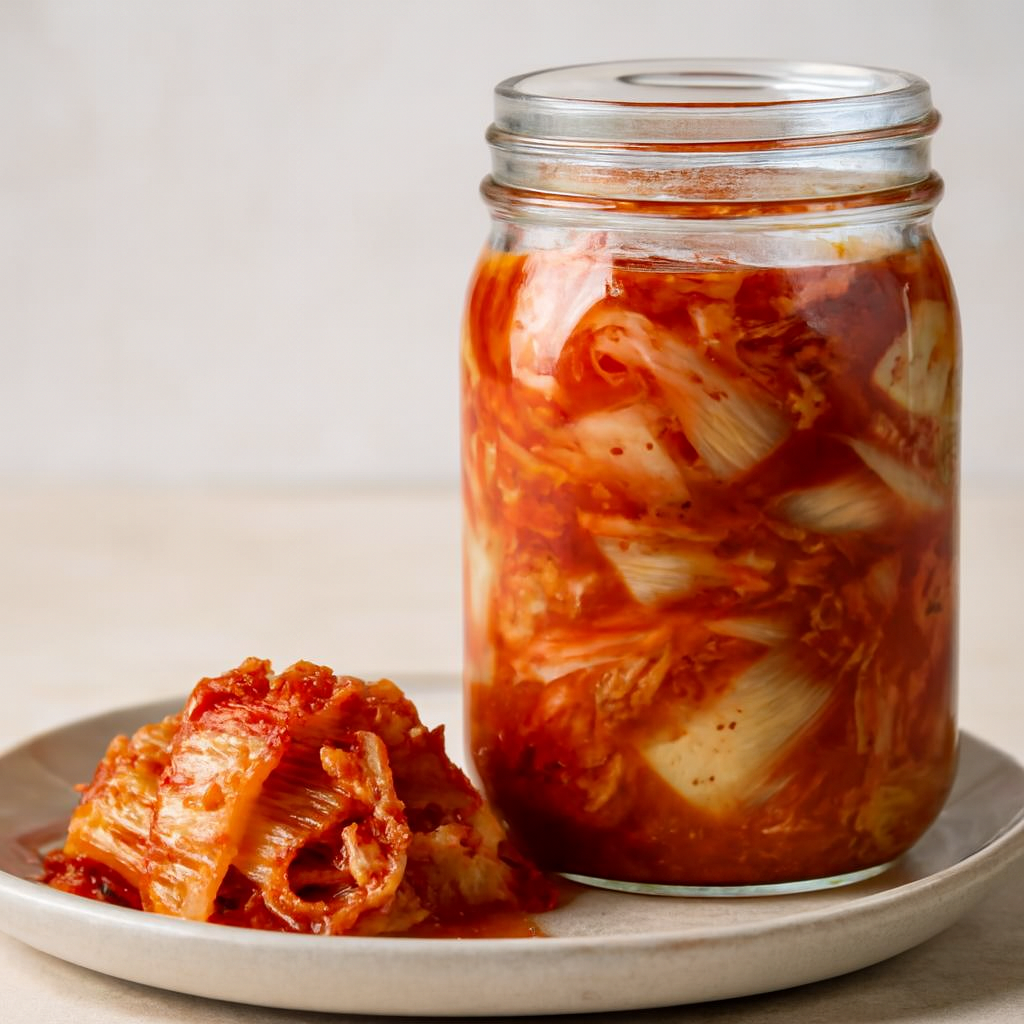
Mother-in-Law's Signature Kimchi
Recipe GLPR56a876785589f2
A classic Korean fermented cabbage kimchi featuring napa cabbage infused with a complex, spiced paste made from salted shrimp, anchovy sauce, gochugaru (Korean red pepper flakes), fresh aromatics, and seafood stock. This traditional condiment develops deep, savory flavors through fermentation and is perfect as a side dish or flavor-enhancing accompaniment to meals.
Save recipes you love
Create a free Grocery List Plus account to save recipes, rate them, and add every ingredient to your grocery list in one tap.
Ingredients
2 medium heads napa cabbage (4 to 5 pounds total)
2 tablespoons kosher salt
2 tablespoons salted shrimp
1/3 cup Sweet Rice-Flour Porridge
1/4 cup anchovy sauce
1/4 cup beef stock
2 tablespoons minced garlic
1 tablespoon peeled, finely grated fresh ginger
2 teaspoons sugar
2/3 cup Korean red pepper flakes (gochugaru)
1/2 cup thinly sliced yellow onion
4 green onions, green parts only, cut into 2-inch pieces (about 1/2 cup)
3 ounces Korean chives or 1/2 bunch European chives, cut into 4-inch pieces (about 1/4 cup)
6 to 8 fresh oysters, shucked and chopped (optional)
Directions
Cut each napa cabbage head in half lengthwise, keeping the base intact. Rinse thoroughly under cold running water, then soak the halves in a large bowl of water for 5 minutes.
Drain the cabbage. Working with one layer at a time, sprinkle the kosher salt between the leaves, ensuring even coverage. Massage gently to distribute the salt throughout. Let the salted cabbage sit at room temperature for 3 to 4 hours, or until the leaves soften and release their liquid. Rinse thoroughly under cold water and squeeze gently to remove excess moisture.
While the cabbage is salting, prepare the seasoning paste. In a small bowl, combine the salted shrimp, rice-flour porridge, anchovy sauce, and beef stock. Stir until well combined.
Add the minced garlic, grated ginger, and sugar to the shrimp mixture. Stir to blend thoroughly.
Stir the Korean red pepper flakes into the paste until fully incorporated and the mixture reaches a smooth consistency.
Add the sliced yellow onion, green onion pieces, and chives to the seasoning paste. If using oysters, chop them and add to the paste now. Mix gently until all vegetables are coated with the paste.
Once the brined cabbage has been rinsed and squeezed dry, begin applying the seasoning paste. Working with each leaf, spread a thin layer of paste between the leaves, starting from the outer leaves and working toward the center. Fold each cabbage quarter to enclose the filling.
Place the seasoned cabbage quarters into a clean glass jar or fermentation vessel. Pack them tightly, pressing down gently to release any air pockets. Cover the jar with a lid or cloth.
Let the kimchi ferment at room temperature (between 60 and 145°F is ideal) for 24 to 72 hours, depending on your preference for fermentation level. You will notice bubbling and the development of a sour aroma as fermentation progresses.
After fermentation, transfer the jar to the refrigerator, where the kimchi will continue to develop flavor and can be stored for up to 3 months. The cold slows fermentation but does not stop it entirely. Serve as a side dish or condiment with rice, soups, or grilled meats.
Comments
This is a traditional fermented kimchi that requires a full 60 hours of fermentation, not the stated hour—budget for weekend project timing and explained expectations on what "3600 minutes" means. Napa cabbage, garlic, ginger, and onions are widely available at Charlotte chains, but salted shrimp, anchovy sauce, and Korean red pepper flakes will likely demand a trip to an Asian market like Harris Teeter's specialty section or a dedicated Korean grocer; the same applies to rice flour porridge if homemade is not an option. At roughly $1.50–$2 per serving for ingredients, this is economical for a condiment that yields six portions and keeps for weeks, making it a strong value for households that eat kimchi regularly. This is not a weeknight dinner but a preserve project that rewards patience and works beautifully as a side dish, topping, or cooking ingredient for weeks after fermentation.
Sign in or create a free account to add your review.