By Grocery List Plus Editorial Staff | Published on June 14, 2026
Serves 4
237 cal · 30 min
Radish Kimchi
Recipe GLPR7da91210f90ca6
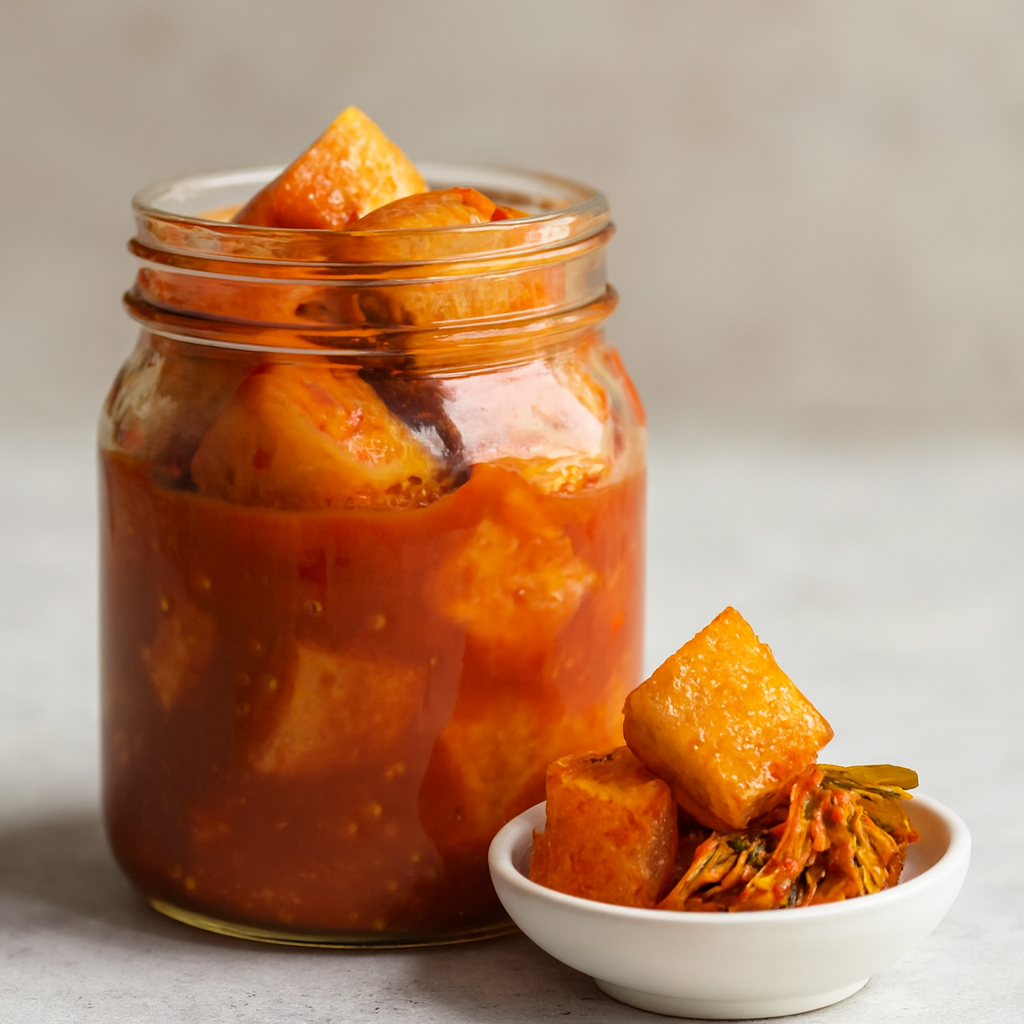
A vibrant Korean fermented condiment made with crisp daikon radishes, Napa cabbage, and Korean watercress, seasoned with gochugaru (Korean red chile powder), garlic, ginger, and salted shrimp for an umami-rich, spicy-tangy flavor. This uncooked fermented kimchi develops complex flavors as it sits and is perfect as a side dish or flavor accent.
Save recipes you love
Create a free Grocery List Plus account to save recipes, rate them, and add every ingredient to your grocery list in one tap.
Ingredients
4 lbs. daikon radishes, peeled and cut into 1-inch cubes
1 lb. Napa cabbage (firm inner leaves only), cut into 1-inch cubes
2 tablespoons kosher salt
1½ cups roughly chopped trimmed Korean watercress
⅓ cup sugar
¼ cup Korean red chile powder (gochugaru)
2 tablespoons finely chopped Korean salted shrimp
2 teaspoons distilled white vinegar
6 cloves garlic, finely chopped
5 scallions, white and light green parts only, cut into 1-inch lengths
1 inch piece fresh ginger, peeled and grated
Directions
In a large bowl, combine the cubed daikon radishes and Napa cabbage. Sprinkle with kosher salt and toss well to distribute evenly. Let the vegetables sit for 10 minutes to release their juices and soften slightly.
While the vegetables rest, prepare the seasoning paste. In a medium bowl, whisk together the sugar, Korean red chile powder, chopped Korean salted shrimp, distilled white vinegar, finely chopped garlic, and grated ginger until fully combined.
Add the Korean watercress and scallion pieces to the seasoning paste and mix thoroughly to coat all ingredients.
Pour the seasoning mixture over the salted vegetables and toss well, making sure every piece is thoroughly coated with the spiced paste.
Transfer the radish kimchi to a clean glass jar or container. Press down gently to pack the vegetables, ensuring the juices rise and cover the ingredients. Cover with a lid and allow to ferment at room temperature for at least 1 day before serving, though flavors deepen over several days. Refrigerate after opening to slow fermentation.
Comments
Korean red chile powder and Korean salted shrimp are specialty items that will require a trip to an Asian market—neither Harris Teeter, Food Lion, Publix, Walmart, ALDI, nor Kroger banners stock them reliably—adding real cost and planning burden for a weeknight. The 30-minute stated time omits fermentation; this is a quick assembly into a jar, but true radish kimchi develops flavor over days and is not a same-night side dish. Daikon radish and napa cabbage are standard at Charlotte chains, and the other aromatics are cheap, so ingredient cost per serving runs low once you've sourced the Korean components. This works best as a planned project for someone who shops Asian markets already or doesn't mind a special stop.
Sign in or create a free account to add your review.