By Grocery List Plus Editorial Staff | Published on June 14, 2026
Serves 16
315 cal · 135 min
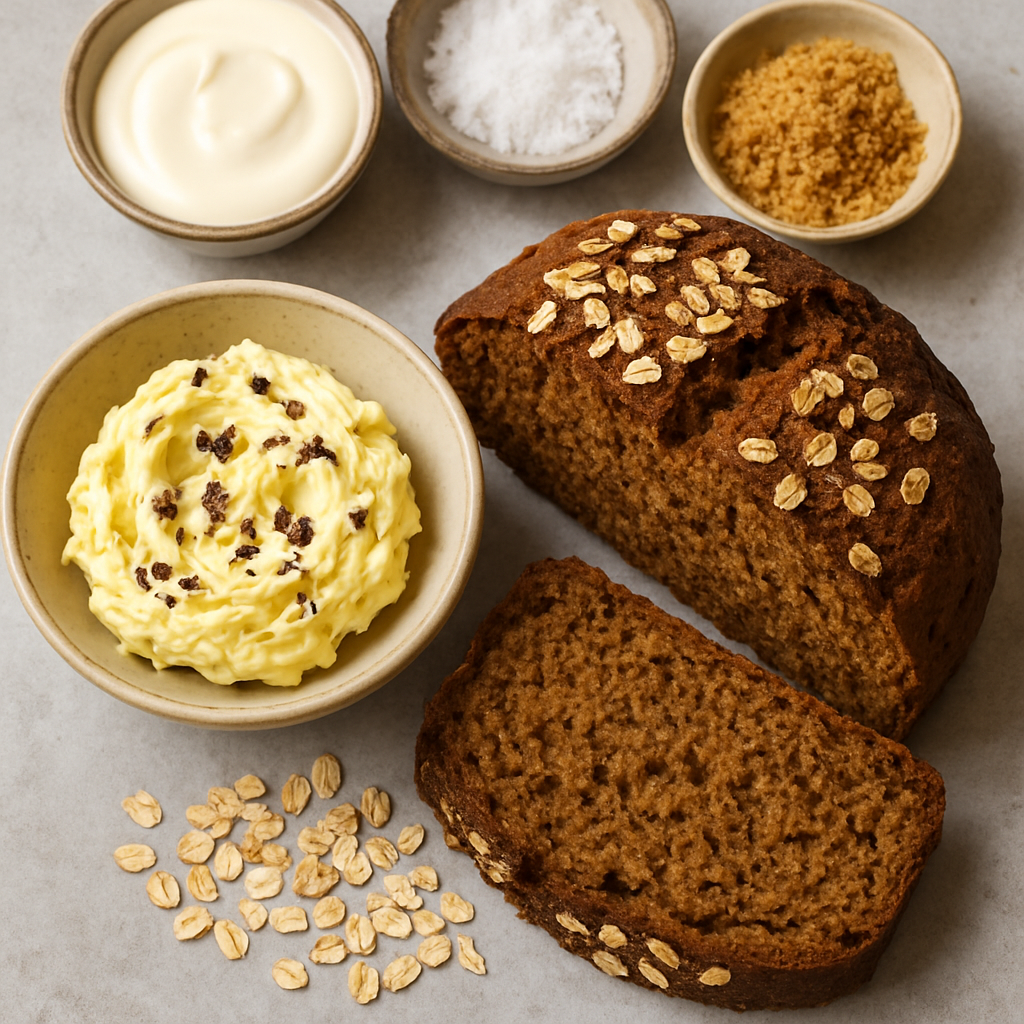
Irish Stout Bread and Homemade Butter
Recipe GLPRe9880bfbd0a2b3
This two-part recipe combines freshly churned salted butter infused with optional dulse seaweed alongside a rustic Irish soda bread made with stout beer. The bread features a dense crumb from wholemeal flour and oats, bound together by dark treacle and rich stout for a complex, slightly bitter flavor. Serve thick slices of the warm bread with generous spreads of your homemade butter.
Save recipes you love
Create a free Grocery List Plus account to save recipes, rate them, and add every ingredient to your grocery list in one tap.
Ingredients
750 ml double cream (highest fat content possible), at room temperature
1 tsp sea salt flakes
1 tsp dulse seaweed, finely chopped (optional)
butter, for greasing the loaf tin
450 g coarse wholemeal flour
30 g porridge oats, plus extra for sprinkling
2 tsp soft dark brown sugar
110 g plain flour
2 tsp bicarbonate of soda
1 tsp salt
300 ml buttermilk
1 tbsp black treacle or molasses
255 ml Irish stout beer, such as Guinness
Directions
To prepare the butter using a butter churner: Pour the room-temperature double cream into the glass jar of a 1-liter butter churner. Secure the lid and turn the handle vigorously. After several minutes, the cream will become foamy, then gradually thicken. Continue turning; after 8–10 minutes the handle will become noticeably difficult to turn. Continue until the cream suddenly separates into a thick yellow butter solids and pale buttermilk liquid.
Alternative method without a churner: Add the double cream to a standing mixer fitted with a whisk attachment. Mix on medium speed for 4–5 minutes until the mixture begins to separate. Once separation starts, reduce the speed to low to prevent buttermilk from splashing. Continue until butter and buttermilk have fully separated.
Pour the contents of the churner jar or mixer bowl into a fine sieve lined with clean muslin cloth set over a bowl. Let the buttermilk drip through the sieve. Reserve the buttermilk in a bottle or jug and refrigerate—you will use this for the bread baking.
Fill a large bowl with very cold water. Carefully remove the butter from the muslin and form it into one cohesive mass. Submerge the butter in the cold water and gently squeeze and massage it to release any remaining buttermilk. Discard the cloudy water, refill the bowl with fresh cold water, and repeat this rinsing process two more times until the water runs clear.
Lift the butter out of the final rinse water and pat gently with paper towels. Sprinkle the sea salt flakes and finely chopped dulse, if using, over the butter surface. Gently massage the salt and dulse into the butter with your fingertips. Taste a small piece and add more salt flakes if desired.
Shape the butter into a block using butter pats, or press it firmly into a butter dish. Transfer to the refrigerator to firm up completely. Once fully chilled, wrap in baking paper and store in the refrigerator for up to 2 weeks.
To prepare the bread, preheat the oven to 190°C (170°C fan-assisted, or gas mark 5). Lightly grease a 900g loaf tin with butter.
In a large mixing bowl, combine the coarse wholemeal flour, porridge oats, and soft dark brown sugar. Sift the plain flour, bicarbonate of soda, and salt directly into the bowl. Mix all dry ingredients thoroughly with a wooden spoon until evenly combined.
Pour the reserved buttermilk into a jug and stir in the black treacle and Irish stout until well blended. Pour the wet mixture into the bowl with the dry ingredients and stir vigorously until a thick, shaggy dough forms. Do not overmix; the dough should be rough and slightly lumpy.
Transfer the dough to the prepared loaf tin, pressing it gently into the corners. Sprinkle a generous handful of porridge oats over the top surface of the dough.
Place the tin in the preheated oven and bake for 55 minutes. If the top of the bread begins to darken too much during baking, loosely cover it with kitchen foil to prevent over-browning. The bread is done when it easily turns out of the tin and produces a hollow sound when tapped on the bottom.
Remove the loaf from the oven and allow it to cool in the tin for a few minutes. Turn the bread out onto a wire cooling rack and let it cool completely before slicing. Serve warm or at room temperature with thick slices spread generously with the homemade butter.
Comments
Dulse seaweed and treacle require specialty stops—dulse at Harris Teeter or a natural-foods store, and treacle is genuinely hard to find in Charlotte chains and may mean ordering online. The 135-minute stated time omits the 30–40 minutes needed to churn butter by hand, so plan for closer to 180 minutes total, or expect to buy butter instead and undercut the homemade angle. The cost per serving lands around $1.20–$1.50 once you account for seaweed and imported molasses, driven mainly by those two specialty ingredients. The bread itself will keep and reheat beautifully, but the butter component argues for same-day assembly, and homemade butter yields a small quantity that goes fast; this is more of a special-occasion showpiece than a weeknight loaf.
Sign in or create a free account to add your review.