By Grocery List Plus Editorial Staff | Published on June 14, 2026
Serves 2
3060 min
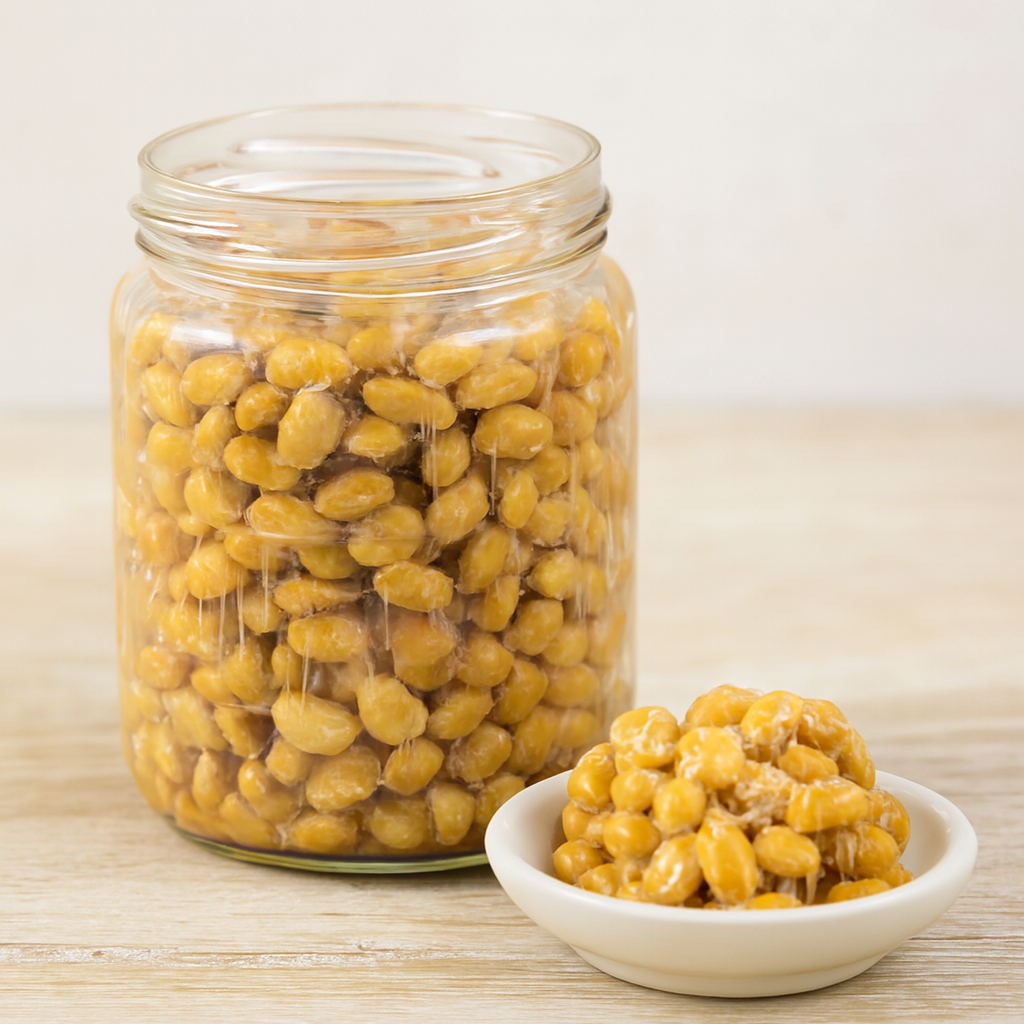
Natto (Japanese Fermented Soybeans)
Recipe GLPRe7b5c967b89873
Natto is a traditional Japanese fermented soybean dish made by inoculating cooked soybeans with beneficial Bacillus subtilis bacteria. The result is a sticky, umami-rich preparation with a distinctive pungent aroma and complex flavor. This recipe guides you through the slow fermentation process at home using natto starter spores, yielding authentic natto in about 51 hours of hands-off fermentation at warm temperatures.
Save recipes you love
Create a free Grocery List Plus account to save recipes, rate them, and add every ingredient to your grocery list in one tap.
Ingredients
2 cups Dried soybeans
0.06 teaspoon Natto starter spores (such as Nattomoto)
Directions
Rinse the dried soybeans thoroughly under cold running water until the water runs clear. Sort through them to remove any debris or damaged beans.
Place the cleaned soybeans in a large pot and cover with water (about 6 cups). Allow them to soak at room temperature for 8 to 12 hours until they have doubled in size and are tender when pressed.
Drain the soaked soybeans well. Return them to the pot and add fresh water to cover by about 2 inches. Bring to a boil over high heat, then reduce heat to maintain a gentle simmer.
Simmer the soybeans for 2.5 to 3 hours until completely tender and easily mashed between your fingers. Skim off any foam that rises to the surface during cooking. Drain thoroughly and cool to about 120°F (49°C).
Dissolve the natto starter spores in a small amount of cooled boiled water (about 2 tablespoons). Gently fold the spore mixture into the warm cooked soybeans, stirring carefully to distribute the culture evenly without breaking down the beans.
Transfer the inoculated soybeans to a clean container with a lid or cover. Place the container in a warm incubation environment (ideally 104–107°F / 40–41°C) such as a dehydrator set to low, an insulated cooler with warm water bottles, or a fermentation box.
Allow the soybeans to ferment undisturbed for 48 to 54 hours at the warm temperature. The beans will develop a sticky, stringy texture and a distinctive pungent aroma as the beneficial bacteria colonize them. Avoid opening the container during fermentation.
After fermentation is complete, transfer the natto to the refrigerator to halt fermentation and develop the characteristic flavor further. The natto is now ready to serve and will keep refrigerated for up to 2 weeks.
Comments
Natto starter culture is not stocked at Charlotte-area Harris Teeter, Food Lion, Publix, Walmart, ALDI, or Kroger locations; you'll need to order online or make a special trip to an Asian specialty store. The stated 3060 minutes (51 hours) is honest for fermentation time but misleading for a weeknight recipe—this is a true project dish, not a quick meal. The ingredient cost is low once you have the starter, but the inoculation process demands precise temperature control and careful technique that makes it unsuitable for casual cooking. This suits someone experimenting with fermented foods who can commit to the full process and doesn't mind the learning curve.
Sign in or create a free account to add your review.