By Grocery List Plus Editorial Staff | Published on June 14, 2026
Serves 36
38 cal · 8640 min
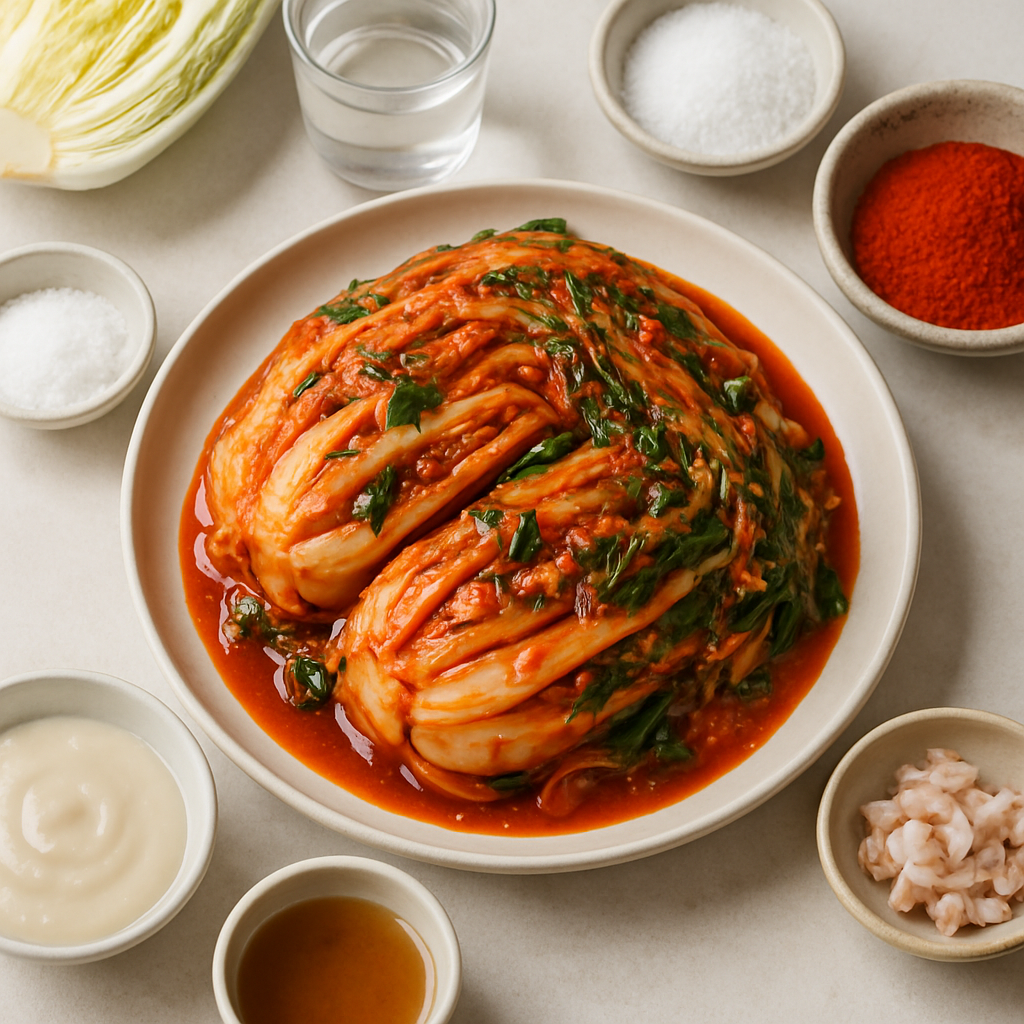
Baechu Kimchi (Napa Cabbage Kimchi)
Recipe GLPRbe11497b9b397f
A traditional Korean fermented napa cabbage kimchi with a spicy, umami-rich flavor profile. Napa cabbage is salted and massaged, then coated with a vibrant gochugaru-based paste infused with garlic, ginger, fish sauce, and crisp vegetable batons. The kimchi ferments over time, developing complex flavors and beneficial probiotics. This recipe yields a large batch perfect for storing in the refrigerator and enjoying over weeks.
Save recipes you love
Create a free Grocery List Plus account to save recipes, rate them, and add every ingredient to your grocery list in one tap.
Ingredients
1 head (about 3 pounds) napa cabbage
2 quarts filtered or bottled water
3/4 cup kosher salt or sea salt
1 cup coarse ground gochugaru (Korean red chile powder)
3 tablespoons glutinous rice flour
2 tablespoons sugar
1/2 cup fish sauce
2 tablespoons saeujeot (Korean salted shrimp) with brine, minced
8 garlic cloves, finely chopped
1 2-inch piece One 2-inch piece fresh ginger, peeled and finely chopped
1 small Asian pear, peeled, cored, and cut into thin batons
4 ounces daikon radish, peeled and cut into thin batons
1 medium carrot, peeled and cut into thin batons
16 scallions, root end trimmed and halved lengthwise, cut into 2-inch pieces
Directions
Cut the napa cabbage in half lengthwise. Remove the cores if they are very thick. Leave the halves intact to keep the leaves attached at the base. Rinse thoroughly under cold running water, separating the leaves gently to remove any dirt trapped between them.
In a large bowl or container, dissolve the kosher salt in the filtered water, stirring until fully dissolved.
Submerge the napa cabbage halves in the salt water, ensuring all leaves are fully immersed. Weight them down if necessary with a plate or clean cloth. Let them sit at room temperature for 4 to 6 hours, until the leaves have wilted and softened.
Remove the cabbage from the salt water and rinse each leaf thoroughly under cold running water to remove excess salt. Gently squeeze out as much moisture as possible without crushing the leaves, then lay them on a clean kitchen towel or paper towels to drain completely.
In a small saucepan, combine the rice flour with 1/2 cup water. Heat over medium heat, stirring constantly until the mixture thickens and becomes translucent, about 2 to 3 minutes. This creates a paste. Remove from heat and let cool to room temperature.
In a large mixing bowl, combine the cooled rice flour paste, gochugaru, sugar, fish sauce, and minced saeujeot with its brine. Stir well to create a smooth, spiced paste.
Add the finely chopped garlic and ginger to the paste and mix thoroughly until well combined.
Add the asian pear batons, daikon radish batons, carrot batons, and scallion pieces to the paste. Toss gently but thoroughly so that all vegetable pieces are evenly coated with the seasoning mixture.
Lay one cabbage half, inner side facing up, on a clean work surface. Taking one leaf at a time, spread a small amount of the seasoned paste generously between each leaf, working your way from the outer leaves toward the center. Once all leaves of that half are coated, fold the cabbage half into thirds or quarters lengthwise to create a compact bundle.
Repeat step 9 with the second cabbage half. Any remaining vegetable-paste mixture can be scattered around the folded kimchi bundles.
Transfer the folded cabbage and any remaining paste to a clean glass jar or fermentation container, packing them in firmly so the vegetables stay submerged under any liquid that rises. Cover loosely with a lid or cloth to allow gases to escape during fermentation.
Let the kimchi ferment at room temperature (ideally 65 to 145°F) for 3 to 7 days, depending on desired sourness and fermentation pace. Taste after 3 days and decide if you prefer more fermentation. Once the flavor is to your liking, seal the container and move it to the refrigerator, where it will continue to ferment slowly and develop deeper flavors over weeks and months.
Serve chilled or at room temperature as a side dish, or use as an ingredient in cooked dishes. Refrigerated kimchi keeps for several months.
Comments
Baechu kimchi requires a dedicated stop for gochugaru, fish sauce, and salted shrimp—none of which are stocked reliably at Charlotte's mainstream chains like Harris Teeter, Food Lion, or Walmart, though ALDI sometimes carries gochugaru. The cost per serving is genuinely cheap once you buy the Korean pantry staples (less than 50 cents per serving), but that upfront shopping trip and ingredient cost run $25 to $35. The stated 8,640 minutes is technically honest for fermentation time, but actual hands-on work is about 45 minutes; the bigger reality is that this is a same-night assembly with a week-long fermentation wait before your first spoonful. This is not a weeknight dinner but a weekend project and a pantry-building investment that pays off only if you eat kimchi regularly enough to use the full 36 servings before they overferment.
Sign in or create a free account to add your review.