By Grocery List Plus Editorial Staff | Published on June 14, 2026
180 min
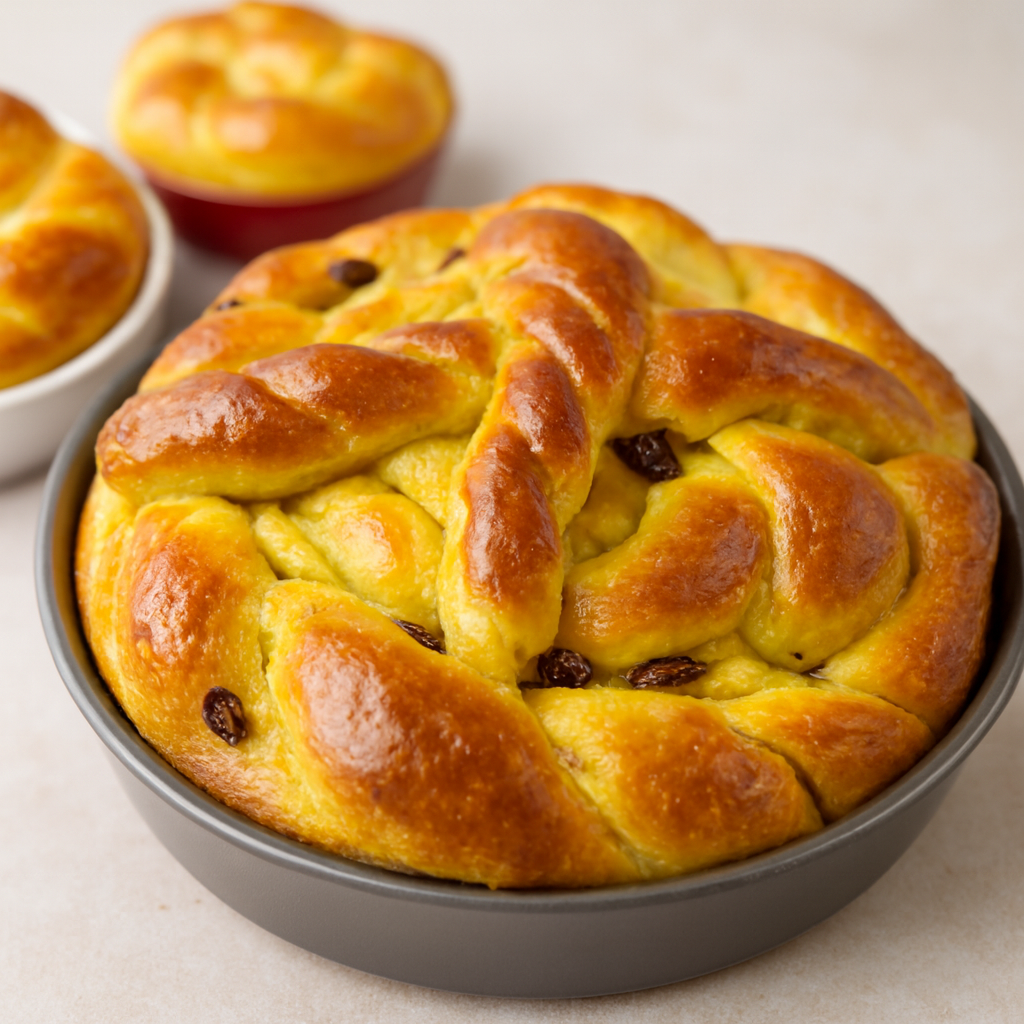
Vegan Paska (Eastern European Easter Bread)
Recipe GLPRc8dec9d5c8ac76
A rich, fragrant vegan Easter bread enriched with whole oranges, aquafaba, and coconut milk. This Eastern European classic features a tender crumb studded with raisins and topped with an optional apricot glaze. The dough uses orange peel and juice blended directly in, creating a naturally colored and flavored loaf. Perfect for festive occasions and can be shaped into individual portions or full-sized loaves.
Save recipes you love
Create a free Grocery List Plus account to save recipes, rate them, and add every ingredient to your grocery list in one tap.
Ingredients
2 Whole oranges, rinsed and cut into eighths with seeds and blemished skin removed
¾ cup Aquafaba or soyfaba
1 cup Unsweetened coconut milk
½ cup Butter, melted
¾ cup Granulated sugar
1 tsp Salt
1 tbsp Instant yeast
6½ cups Bread flour or all-purpose flour
1 cup Raisins (optional)
2 tbsp Runny apricot jam or melted butter for brushing (optional)
Directions
Rinse the oranges thoroughly under cool water and cut each into eight pieces. Discard any seeds and remove blemished or damaged skin, but keep the peel intact on the remaining pieces.
Place the orange pieces, aquafaba, coconut milk, melted butter, sugar, and salt into a blender or food processor. Blend on high speed until completely smooth and uniform, approximately 40 seconds.
Transfer the blended mixture to the bowl of a stand mixer fitted with a dough hook. Sprinkle the instant yeast over the surface, then add 6½ cups of flour (reserve up to ½ cup in case you need it later).
Mix on medium-low speed, scraping down the bowl as needed, until all flour is incorporated into the dough. Continue kneading on medium-low speed for 12 minutes. The dough will become soft and may pull slightly from the bowl sides but won't form a compact ball at this stage.
Turn the dough onto a lightly floured surface and shape it into a ball with your hands. Use a bench scraper to help shape it. The dough should be soft and tacky; if it is too sticky to handle, sprinkle additional flour over it in small amounts and fold it in until the texture is manageable (add up to ½ cup more flour total if needed).
Grease the mixer bowl lightly and return the shaped dough ball to it. Cover the bowl with plastic wrap or a damp kitchen towel. Allow the dough to rise in a warm, draft-free location for 1 to 1½ hours, until it has approximately doubled in size.
Punch down the risen dough firmly to release most of the gas. If you are using raisins, fold them in now by pressing them into the dough and folding the dough over them until evenly distributed.
Divide the dough into pieces based on your desired bread size: divide into 16 pieces for small individual paskas (baked in 8-oz ramekins), 8 pieces for medium breads, 4 pieces for larger loaves, or 2 pieces for full-sized loaves (baked in 9x5 inch loaf pans or 7-inch round cake pans).
Shape or braid each dough piece as desired, forming them into the final shape you want them to have in the oven. Arrange them on parchment-lined baking sheets or in your prepared baking vessels.
Cover the shaped doughs loosely with a kitchen towel or plastic wrap and let them rise in a warm place for about 45 minutes, until they increase to roughly 1.5 times their original size (not quite doubled). Meanwhile, preheat your oven to 350 °F (175 °C).
Place the loaves in the preheated oven. Bake for 35 to 60 minutes depending on size: 35 minutes for 16 small pieces, up to 1 hour for 2 large loaves. If the top is browning too quickly during baking, cover with aluminum foil or place a large stainless steel bowl over the breads as a makeshift lid.
Remove the baked paskas from the oven. For a glossy finish, immediately brush each warm loaf with apricot jam or melted butter if desired. Allow to cool before serving.
Comments
Aquafaba is the stumbling block: none of the major Charlotte chains (Harris Teeter, Food Lion, Publix, Walmart, ALDI, Kroger) consistently stock it, which means a second trip to a specialty or natural-foods store for this one ingredient. The rest of the build is straightforward and affordable. The 180-minute stated time is honest for a bread with rise cycles, but expect real hands-on work in the first 20 minutes and active shaping in minutes 150–160; most of that time is unattended rising. This is a weekend project, not a weeknight dinner, but it keeps well and reheats beautifully, and the vegan egg wash (aquafaba) produces genuine shine and crumb structure—it's worth the fuss if you're already planning Easter baking.
Sign in or create a free account to add your review.