By Grocery List Plus Editorial Staff | Published on June 14, 2026
Serves 10
40 cal · 70 min
Classic Homemade Kimchi
Recipe GLPR845c5fb8f8ee3a
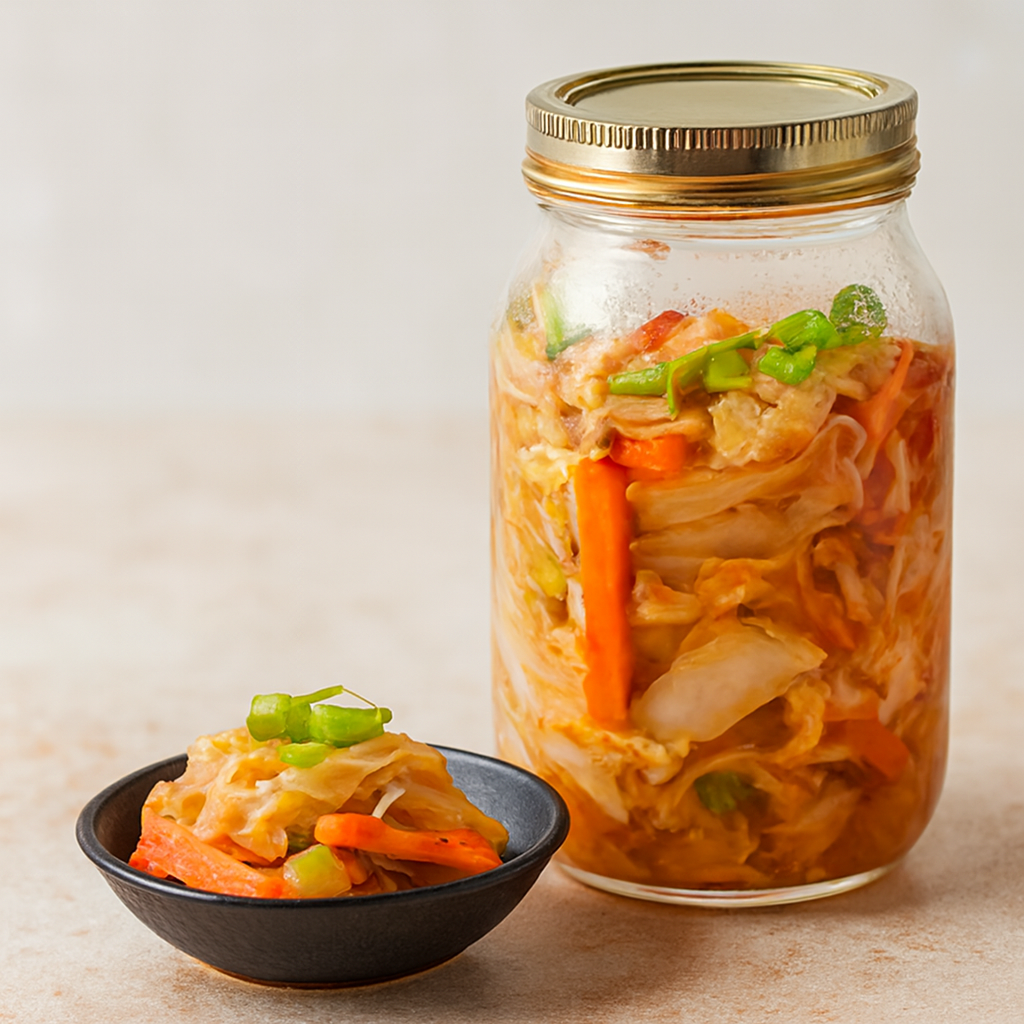
This traditional Korean fermented cabbage preparation combines fresh vegetables with a savory, spicy paste made from ginger, garlic, fish sauce, and red pepper flakes. After brining the cabbage to soften it, you mix in crisp carrots, radishes, and scallions, then pack everything into a jar to ferment. Over 3 to 14 days, beneficial bacteria develop complex flavors while natural juices rise above the vegetables to preserve them. The result is a zesty, umami-rich condiment that pairs with rice, stews, or as a side dish. Store in the refrigerator once it reaches your preferred level of fermentation.
Save recipes you love
Create a free Grocery List Plus account to save recipes, rate them, and add every ingredient to your grocery list in one tap.
Ingredients
1 medium head Napa cabbage
3 tablespoons pink Himalayan salt
5 cups filtered water
2 carrots, cut into matchsticks
5 radishes, cut into matchsticks
4 scallions, chopped
1 tablespoon ginger, grated
4 cloves garlic, minced
3 tablespoons fish sauce
1 tablespoon red pepper flakes
1 tablespoon sugar
Directions
Slice the Napa cabbage in half lengthwise, then quarter it. Remove and discard the core. Cut the cabbage crosswise into thin strips about ½ inch wide.
Place the sliced cabbage into a large bowl. Sprinkle the salt evenly over the cabbage. Wearing clean food-grade gloves, massage the salt thoroughly into the cabbage, working it in for 2–3 minutes until the leaves begin to soften and release their liquid.
Pour the filtered water over the salted cabbage. Place a clean plate or flat weight on top of the cabbage to keep it submerged under the brine. Let sit at room temperature for 1 hour.
While the cabbage brines, prepare all remaining vegetables: cut the carrots into thin matchsticks, cut the radishes into thin matchsticks, chop the scallions into bite-sized pieces, grate the ginger, and mince the garlic. Set aside in separate bowls.
In a small bowl, combine the minced garlic, grated ginger, fish sauce, red pepper flakes, and sugar. Mix well until the sugar dissolves and the ingredients are evenly blended. This forms your spice paste.
After 1 hour, drain the cabbage of its brining water. Rinse the cabbage briefly under fresh filtered water to remove excess salt. Return the drained cabbage to the large bowl.
Add the prepared carrots, radishes, scallions, and spice paste to the cabbage. Wearing clean gloves, mix everything together thoroughly, making sure the spice paste coats all the vegetables evenly. Work gently but completely for 1–2 minutes.
Transfer the kimchi mixture into a clean 32-ounce Mason jar or fermentation vessel. As you fill the jar, use a clean wooden mallet or spoon handle to press down firmly on the kimchi, compressing it so that the natural liquid rises above the vegetable mixture and removes air pockets. Continue filling and pressing until all the kimchi is in the jar and there is a ½- to 1-inch of empty space at the top. The liquid should rise above the vegetables.
To keep the vegetables submerged, place a glass fermentation weight on top of the kimchi if available. If you do not have a weight, fold a large outer leaf of cabbage over the surface of the mixture to create a barrier that prevents the vegetables from floating above the brine.
Close the jar with a tight-fitting lid. If using a standard metal or plastic lid (not designed for fermentation), leave the additional ½ inch of headspace at the top to allow gases produced during fermentation to escape safely.
Place the sealed jar on your counter at room temperature, away from direct sunlight. Let it ferment for 3 to 14 days, tasting it daily after the third day to reach your preferred level of tanginess and fermentation. Once you are satisfied with the flavor, transfer the jar to the refrigerator, where it will keep for up to 1 month with the lid sealed.
Comments
Fish sauce is the sticking point: you'll need an Asian market or the international aisle at Harris Teeter or Kroger, adding a second stop for most Charlotte shoppers. The other ingredients are standard produce and pantry items at any major grocery, and the actual hands-on time is fifteen minutes of chopping; the seventy-minute stated time is mostly passive fermentation, so manage expectations there. At roughly fifty cents per serving it's economical, and kimchi keeps for weeks in the refrigerator, making it ideal for side dishes or ramen toppings throughout the month. Budget the extra stop for fish sauce and you have a genuine weeknight project, not a weekend undertaking.
Sign in or create a free account to add your review.