By Grocery List Plus Editorial Staff | Published on June 14, 2026
Serves 8
55 cal · 10080 min
Homemade Fermented Sauerkraut
Recipe GLPRc4bec5785e13d2
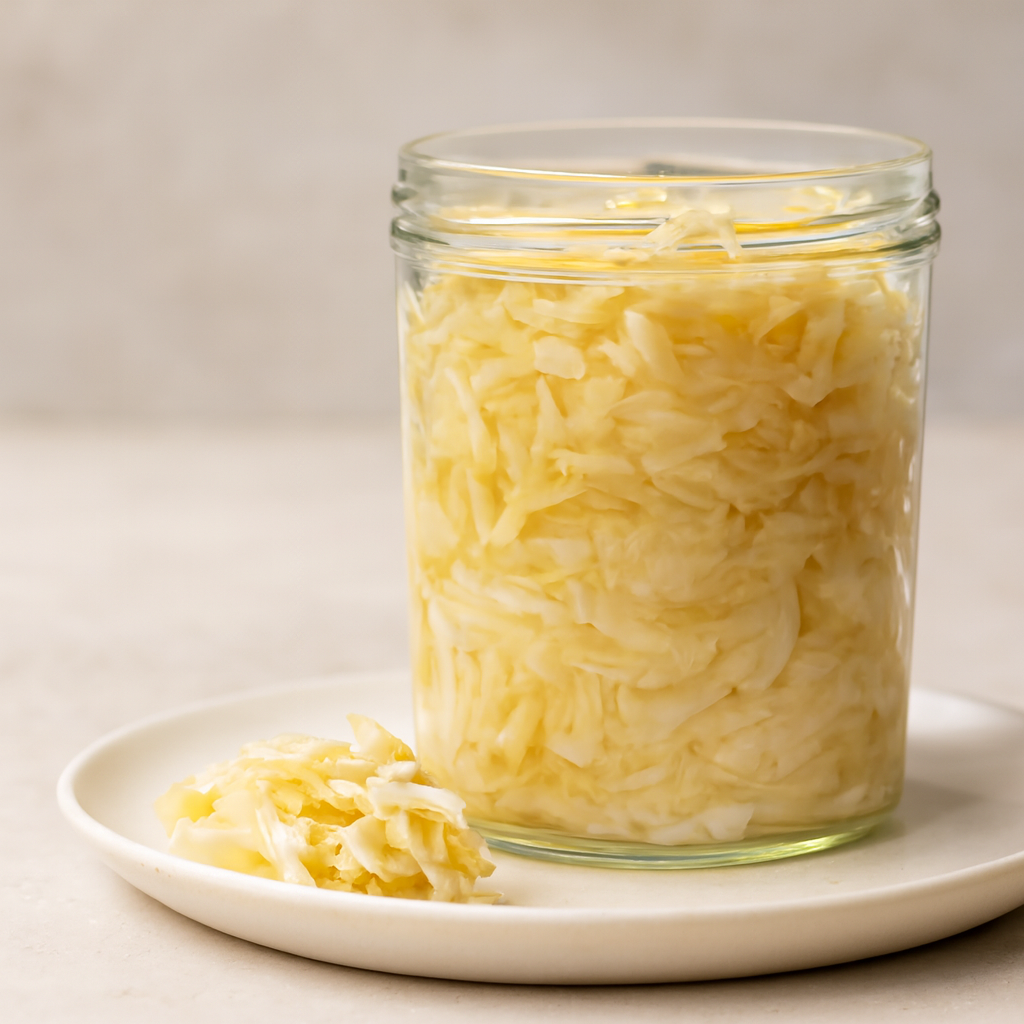
Fresh sauerkraut made through traditional fermentation, this condiment combines shredded cabbage with salt to develop complex, tangy flavors over weeks. The simple process relies on salt to draw out cabbage's natural juices, creating a brine that supports beneficial lactobacillus fermentation. Optional caraway seeds or juniper berries add aromatic warmth. This probiotic-rich condiment pairs beautifully with pork, sausages, and hearty Central European fare.
Save recipes you love
Create a free Grocery List Plus account to save recipes, rate them, and add every ingredient to your grocery list in one tap.
Ingredients
1 small head green cabbage (about 3 pounds), trimmed, cored, and shredded
28 grams Salt (28g or 3 tablespoons Diamond Crystal kosher salt, measured by weight for accuracy)
1 teaspoon Caraway seeds or juniper berries (1 teaspoon / 4g, optional)
Directions
Clean your glass jar or fermentation vessel thoroughly with hot water and ensure it is completely dry. Carefully reserve the largest, cleanest outer leaves from the cabbage head before trimming and shredding the rest.
Shred the trimmed cabbage finely using a sharp knife, mandoline, or food processor. Transfer the shredded cabbage to a large, clean bowl.
Sprinkle the weighed salt (28 grams) over the shredded cabbage. If using caraway seeds or juniper berries, add them now. Toss the cabbage thoroughly with your hands or a spoon, gently massaging and working the salt into the vegetable.
Continue massaging the cabbage for 5–10 minutes until a brine begins to accumulate in the bottom of the bowl. This liquid, drawn from the cabbage by the salt, will become your fermentation medium. If the cabbage seems too dry after this time, add additional salt a pinch at a time, testing the brine's taste as you go.
Transfer the cabbage and all of its brine into a clean glass jar, packing it down firmly with a spoon or clean hand. The brine should rise to cover the cabbage completely; if needed, add a little extra salt water (1 teaspoon salt dissolved in 1/4 cup water).
Press one of the reserved outer cabbage leaves over the shredded cabbage to help keep it submerged beneath the brine. This prevents mold and unwanted bacterial growth.
Cover the jar loosely with a clean cloth, coffee filter, or paper towel secured with a rubber band. This allows gases produced during fermentation to escape while preventing dust and contaminants from entering.
Place the jar in a cool, dimly lit location away from direct sunlight—ideally between 60–70°F (16–21°C). A pantry, cupboard, or cool corner works well.
Monitor your sauerkraut daily. You should see bubbles rising and the brine becoming cloudy within 3–5 days as fermentation begins. Skim off any white film (kahm yeast) that appears on the surface with a clean spoon; it is harmless but can affect flavor. Ensure the cabbage stays submerged throughout.
Ferment for at least 2 weeks for mild sauerkraut, or up to 4–6 weeks (or longer) for deeper, more complex flavors. Taste it periodically and transfer the jar to refrigeration once it reaches your desired tanginess.
Once satisfied with the flavor, cover the jar tightly and refrigerate. Properly fermented sauerkraut will keep for several months in the cold. The fermentation slows dramatically in the cold but continues very slowly.
Comments
Cabbage and salt are staples at every Charlotte chain, and caraway seeds are stocked at Harris Teeter and Kroger for roughly $4 per small jar, though you'll use a teaspoon or two; this drives the cost to under 50 cents per serving. The stated time is honest—10080 minutes is exactly seven days of hands-off fermentation, with only five minutes of actual work upfront. This is a set-it-and-forget-it dish that reheats beautifully and yields eight generous servings, perfect for a household that plans ahead. The only friction is the commitment: you need counter space and patience, which makes it less convenient for a weeknight impulse than for someone who meal-preps and cooks intentionally.
Sign in or create a free account to add your review.