What's actually changing in how America buys groceries
Grocery List Plus Editorial Staff
Published July 29, 2026 · 5 min read
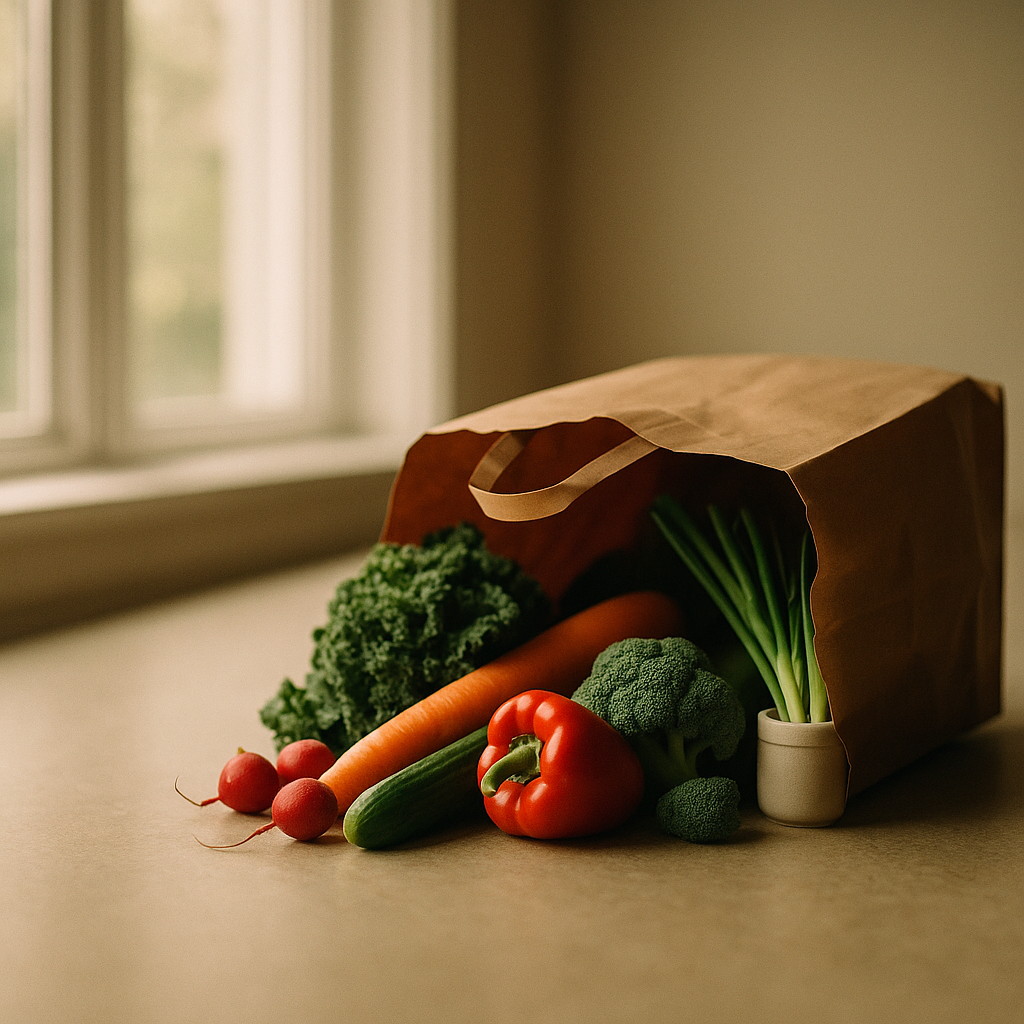
Grocery shopping changes slowly and then, occasionally, in ways that are obvious only in hindsight. Four shifts are worth understanding right now, because each one changes something practical about how you shop.
Store brands stopped being a compromise
For decades, private label was understood as the trade-off option — cheaper, and you knew why. That framing has broken down, and there are numbers behind it.
Store-brand unit share in the US reached 23.8% by mid-2026, an all-time high, according to Circana data published by the Private Label Manufacturers Association. Full-year 2025 store-brand sales hit a record $282.8 billion, up more than $9 billion. The comparison that matters is the growth rates side by side: store-brand dollar sales rose 3.3% while national brands managed 1.2%. In units, store brands grew 0.6% while national brands *declined* 0.6%.
That gap continued into 2026. For the six months ending mid-June, private-label unit sales were up 0.2% while national brands fell 0.5%.
Why it matters to you: the store brand is no longer automatically the lesser choice, and retailers have responded by building tiered lines — value, mainstream, and genuinely premium ranges competing on quality rather than price. It also means "always buy store brand" is as blunt an instruction as its opposite. Categories vary enormously, which is worth testing one item at a time.
Weight-loss drugs are showing up in basket data
GLP-1 medications went from a diabetes treatment to a mass-market weight-loss category in a remarkably short time, and grocery is one of the places the effect is now measurable.
Research by Sylvia Hristakeva, Jūra Liaukonytė and Leo Feler, published in the *Journal of Marketing Research* in 2026, tracked household purchasing after someone in the home started a GLP-1. Within six months, those households cut grocery spending by an average of 5.3% — roughly $416 a year. For households earning above $125,000 the drop exceeded 8%, about $690 a year.
The composition shifted more than the total. Calorie-dense processed categories took the largest hit, with savory snacks down around 11% and chips, baked goods, sides and cookies falling between roughly 6.7% and 11.1%. Purchases of yogurt, fruit, meat snacks and deli items rose.
One finding is worth stating carefully, because it's the counterintuitive part: baskets got healthier mainly because households cut unhealthy items rather than added healthy ones. Among people who stayed on the medication, the reduced spending persisted at least a year, though it shrank over time.
Why it matters to you: this is a demand-side change large enough that manufacturers and retailers are reformulating and re-sizing around it. Expect the shelf to keep shifting toward protein and smaller portions whether or not anyone in your household takes one.
Self-checkout got walked back
Self-checkout expanded for years on a straightforward premise: fewer staffed lanes, lower labour cost, faster throughput. The premise turned out to be incomplete.
Dollar General removed self-checkout from roughly 12,000 stores during 2024, eliminating it entirely in the 300 locations worst affected by theft. A year on, the company credited lower shrink and higher inventory markup for lifting first-quarter gross margin 78 basis points to 31% — the clearest evidence yet that the machines carried a cost that didn't appear on the labour line.
Others narrowed rather than removed. Target capped self-checkout at roughly 10 to 15 items and staffed the area more heavily. Walmart has pulled kiosks at selected stores in favour of associate-staffed lanes. The National Retail Federation put total US retail shrink at $90 billion in its 2025 report.
Why it matters to you: the "just scan it yourself" era is not a straight line, and store-by-store variation will be normal for a while. If you shop a large basket, staffed lanes are quietly returning.
The ads moved onto the shelf you're scrolling
Online grocery is no longer a novelty — it's a durable share of the category, forecast to grow at about 11.6% a year through 2028. The more consequential change is how retailers make money from it.
Retail media — grocers selling advertising placement against their own digital and physical shelves — has become one of the most profitable things a supermarket does, carrying margins well above those on selling food. US advertisers spent $60.32 billion on retail media in 2025 and are projected to spend $71.09 billion in 2026. 38% of food retailers and 71% of brands now use these networks, and competition for the best placements has pushed up prices for high-intent slots like sponsored search.
Why it matters to you: when you search a grocery app, the first results may be there because someone paid for the position rather than because they're the best match or the best price. That's legal and labelled, but it's worth reading the results as advertising-shaped rather than neutral.
What this adds up to
The through-line is that comparison is getting harder, not easier. More tiers of store brand, more reformulation, more paid placement in the results you're shown.
Sources: [PLMA/Circana 2026 Private Label Report](https://plma.com/article/2026-private-label-report-2828-billion-sales) · [FoodNavigator on 2026 unit-share growth](https://www.foodnavigator.com/Article/2026/07/09/private-label-widens-lead-over-national-brands-in-2026-grocery-unit-sales/) · [Hristakeva, Liaukonytė & Feler, Journal of Marketing Research (2026)](https://journals.sagepub.com/doi/10.1177/00222437251412834) · [Food Business News on the GLP-1 findings](https://www.foodbusinessnews.net/articles/29532-glp-1-users-cut-food-spending-by-53) · [Retail Dive on Dollar General self-checkout](https://www.retaildive.com/news/dollar-general-eliminate-self-checkout-shrink/717520/) · [NBC News on retailer self-checkout rollbacks](https://www.nbcnews.com/business/business-news/major-retailers-are-backtracking-self-checkout-rcna160234) · [eMarketer retail media forecast](https://www.emarketer.com/content/faq-on-retail-media-networks-how-marketers-should-allocate-budgets-2026)
THE SHORT VERSION
Store brands are at a record 23.8% unit share and outgrowing national brands. GLP-1 households cut grocery spend about 5.3%, mostly by dropping snacks. Several chains pulled back self-checkout after the shrink maths stopped working. And retail media is now a $71 billion business, which shapes what a grocery app shows you first.
The countermeasures are the unglamorous ones they've always been: know what you need before you shop, compare on price per unit rather than presentation, and check your own store's price rather than assuming a chain-wide one.