How supermarket sales are designed
Grocery List Plus Editorial Staff
Published August 1, 2026 · 4 min read
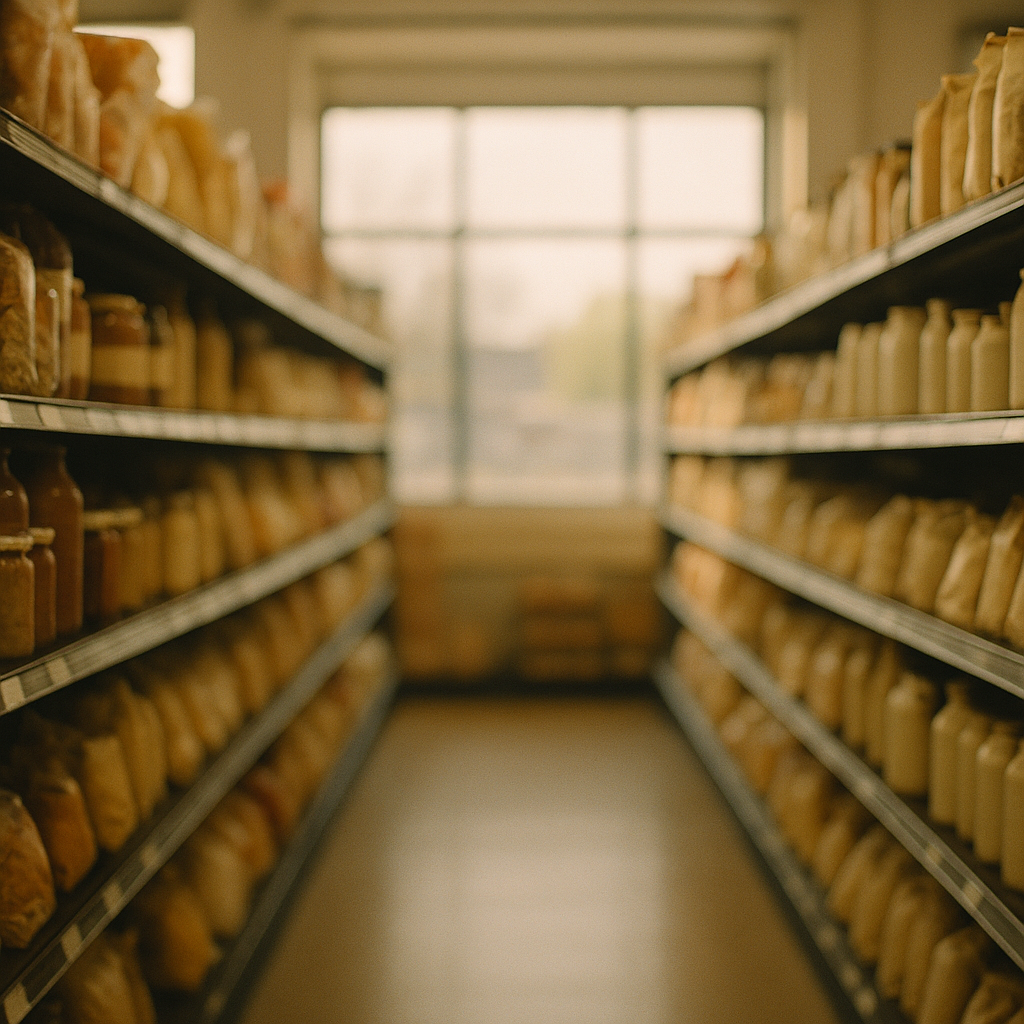
Grocery promotions are not random, and they're not primarily generosity. They're a designed system with a well-understood purpose: get you into the store, keep you moving through it, and raise the value of the trip.
None of that is dishonest. Retail runs on thin margins, and promotions are how stores compete. But the design is built around predictable human behavior, and the shopper who understands the mechanics gets more out of the same promotions than the one who doesn't.
Loss leaders and where they sit
A loss leader is an item priced at little or no margin — occasionally below cost — to bring people through the door. It's usually something you buy often enough to have a price memory for: milk, eggs, rotisserie chicken, soda, bananas, a seasonal staple.
The economics only work if the trip includes other things, which is why loss leaders are placed where they force a walk. Milk and eggs are at the back. The rotisserie chicken is near the far corner. Getting to them takes you past a lot of shelves you weren't planning to visit, and that exposure is the point.
How to use it: loss leaders are genuinely good prices, and buying only the loss leaders is a perfectly legitimate way to shop. The mechanism only costs you if the walk converts into unplanned purchases — which is the entire reason the layout exists.
"10 for $10" and the number that isn't a requirement
Multi-buy pricing is one of the most effective promotional formats ever devised, and much of its power comes from a misunderstanding.
In most US grocery stores, "10 for $10" means the item costs $1. You can buy three and pay $3. The multiple is a suggestion — an anchor that makes ten feel like the intended quantity — not a condition.
Some promotions genuinely do require the multiple, and those are marked: "must buy 4," "buy 2, get 1 free," "mix and match 5 or more." The distinction is printed on the tag. The lesson is to read whether a minimum is stated rather than inferring one from the format.
There's a second layer worth knowing. "10 for $10" frequently isn't a discount at all — the item's everyday price was already $1, and the promotion is packaging rather than price. The number that reveals this is, again, the unit price, which doesn't change when the marketing does.
How to use it: buy the quantity you actually want unless a minimum is stated. Check whether the "sale" price differs from the regular price.
Endcaps are advertising space
The displays at the end of each aisle are the most valuable real estate in the store, and shoppers overwhelmingly read them as "this is on sale."
Frequently it isn't. Endcaps are often paid placements — brands compete for them, sometimes through trade promotion agreements — and the position is bought regardless of whether the price moved. A product on an endcap at its ordinary price will still outsell the same product mid-aisle by a wide margin, purely on visibility.
How to use it: treat an endcap as a display, not a price signal. If it doesn't have a sale tag, it isn't on sale.
The other quiet mechanics
Anchoring. A "was $6.99, now $4.99" tag makes $4.99 feel like a deal because it's measured against the number beside it rather than against what the product is worth to you. The comparison price does the work.
Eye level costs more. Shelf position is negotiated, and the most profitable products tend to sit where your gaze naturally lands. Cheaper alternatives — often the store brand — are frequently on the bottom shelf. Looking down is one of the highest-yield habits in a grocery store.
Bigger carts. Cart sizes have grown over the decades, and the research on this is unambiguous: a larger cart produces a larger basket. If you're buying a handful of things, take a basket.
Loyalty pricing. Increasingly the "sale" price requires a loyalty card or app clip. That's a real discount, and the trade is your purchase data. Worth making knowingly rather than by default.
What actually protects you
The mechanics above are effective against unplanned shopping and largely powerless against planned shopping. That's the whole defense, and it's unglamorous.
A list decides what you need before you're standing in an environment engineered to influence that decision. Everything described here — the walk to the back, the endcap, the anchor price, the multi-buy anchor — works on the margin between what you intended to buy and what you're willing to buy while you're there. A list narrows that margin.
The second protection is the unit price, because most of these techniques manipulate presentation rather than value. Presentation changes constantly. Price per ounce doesn't lie about itself.
THE SHORT VERSION
Loss leaders are real bargains positioned to make you walk. Multi-buy pricing usually doesn't require the multiple. Endcaps are bought placements, not price signals. Eye level is expensive and the bottom shelf is cheap.
None of it is a con — it's competent retail. Shop from a list, check the unit price, and the design mostly stops applying to you.